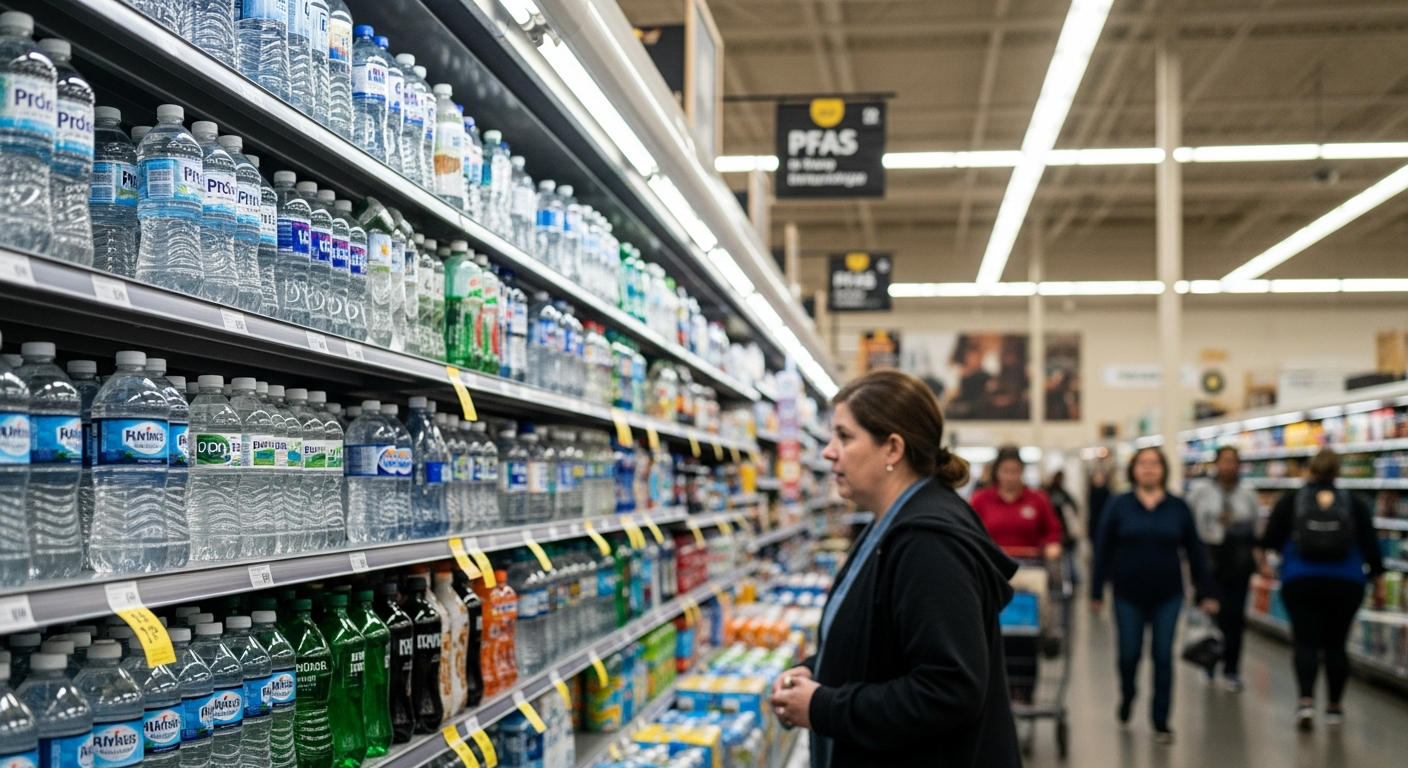
176 Million Americans Drink PFAS Water: EPA Just Rolled Back Protections
More than half the US population is drinking tap water contaminated with PFAS forever chemicals right now. According to new analysis from the Environmental Working Group, 176 million Americans are exposed to PFAS in their drinking water, up 4 million from the previous EPA dataset. That number isn't a projection or a worst-case estimate. It comes from the EPA's own testing data, compiled across 9,728 confirmed contamination sites spanning all 50 states.
At the same moment that exposure figures are rising, federal protections are shrinking. The Trump EPA has moved to rescind drinking water limits for four of the six PFAS compounds regulated under the Biden administration's 2024 rule. The agency built to protect public health just walked away from one of its most significant recent public health actions.
What the Data Actually Shows
The Environmental Working Group's March 2026 analysis pulled from EPA test results at public water utilities across the country. The findings make clear this is a nationwide problem with no regional boundaries. Rural well water and urban treatment systems alike show contamination. No state is clean.
The 176 million figure represents people whose water supplies have detectable PFAS levels. Exposure is concentrated but widespread. Large utilities serving millions of people test positive alongside smaller systems serving towns of a few thousand. The 4 million increase from the previous dataset reflects both expanded testing and the continued spread of contamination, not just better data collection.
PFAS compounds don't break down naturally in the environment. Once they enter a water source, they persist. Contamination from military bases, manufacturing plants, and industrial sites spreads through groundwater over decades, reaching water systems far removed from the original source.
The Trump EPA's Quiet Rollback
The Biden administration's 2024 rule set maximum contaminant levels (MCLs) for six PFAS compounds, the first time the federal government had ever established enforceable limits for these chemicals in drinking water. It was a significant regulatory step, years in the making.
The Trump EPA is now rescinding limits for four of those six compounds: PFHxS, PFNA, GenX, and PFBS. The agency announced it will retain the 4 parts per trillion limit for PFOA and PFOS, the two most studied and most widely known PFAS chemicals, while pulling back protections for the four others.
The problem with this approach is that PFNA, GenX, and PFBS are not legacy compounds. They are substitutes, newer-generation chemicals that industry shifted to specifically because PFOA and PFOS faced regulatory scrutiny. Manufacturers swapped out the regulated compounds for ones that weren't on the radar yet. Rolling back limits for these substitutes removes the only federal check on the chemicals the industry already moved to when the older ones got regulated.
Federal courts took notice. A federal court temporarily blocked the EPA's attempt to vacate the broader limits while legal challenges move forward. The Natural Resources Defense Council and other environmental groups have filed suits to preserve the original rule. Water utilities still face a 2031 compliance deadline for the PFOA and PFOS limits that remain, but the regulatory future of the other four compounds is now uncertain.
What PFAS Does to Your Body
PFAS chemicals are called "forever chemicals" because they accumulate in the body and don't metabolize or flush out through normal processes. Every exposure adds to the total load. There is no mechanism by which the body clears them on its own.
The documented health effects are serious. Research links PFAS exposure to immune system suppression, increased risk of kidney and testicular cancers, developmental harm to fetuses and infants, and reduced vaccine effectiveness in children. That last finding is particularly significant: children exposed to higher PFAS levels produce fewer antibodies after vaccination, meaning the vaccines work less well at the age when immunity matters most.
No safe threshold has been established for cumulative PFAS exposure. The science doesn't support a number below which the effects stop. And because most Americans carry PFAS exposure from multiple simultaneous sources, water is only part of the picture.
Tap Water Is Only Part of the Problem
PFAS enter the food supply through multiple pathways independent of tap water. Contaminated soil used to grow crops, PFAS-treated food packaging, and industrial runoff affecting agricultural land all contribute. People who install a water filter and consider themselves protected may still be consuming significant PFAS through the food they eat.
The FDA has found PFAS in food samples across a range of categories. Packaged foods and processed items carry PFAS loads that compound what's already coming from tap water. Someone drinking filtered water but eating a diet heavy in packaged foods, fast food wrappers, and microwave popcorn is accumulating PFAS from the food side while eliminating it from the water side.
VeriFoods tracks PFAS findings in food products. When you scan a barcode, the app shows whether that product has been flagged for PFAS contamination based on lab testing data. For anyone managing their total PFAS exposure, knowing what's in your food is as important as knowing what's in your water.
What You Can Do Right Now
The regulatory situation is outside your control. But your individual exposure isn't entirely out of your hands.
Check the Environmental Working Group's Tap Water Database to see the specific contamination data for your water utility. The database lets you search by zip code and see which PFAS compounds are present and at what levels. If your utility shows contamination, a certified water filter is your most direct option.
Two filter types are independently verified to remove PFAS from tap water. Reverse osmosis systems certified to NSF/ANSI Standard 58 are the most effective option and remove the broadest range of compounds. Activated carbon block filters certified to NSF/ANSI Standard 53 are less expensive and reduce PFAS levels significantly, though not as comprehensively as reverse osmosis. Both outperform standard pitcher filters.
On the food side, the highest-risk items for PFAS exposure are microwave popcorn (the bag lining), fast food wrappers and containers, nonstick cookware with worn coatings, and packaged foods in grease-resistant packaging. Limiting these reduces food-based PFAS exposure regardless of what's happening with tap water regulations.
Use VeriFoods to scan products before buying. The app flags products with documented PFAS findings, giving you a way to make decisions about food-based exposure at the point of purchase. Water filtering handles one route of exposure. Knowing what's in your food handles another.
Follow the legal battle as it develops. Federal courts have already temporarily blocked part of the EPA rollback. Challenges from NRDC and other groups are active, and the outcome may reinstate the broader protections. The 2031 compliance deadline for PFOA and PFOS limits remains in place for water utilities regardless of how the litigation resolves.
The federal government has stepped back from one of its most meaningful recent actions on this issue. That makes the steps individuals take more important, not less. Filtering your water and auditing your food are the two most direct things in your control.
Stay ahead of the label.
Get early access to VeriFoods and be the first to see what's really in your food.
Sources
Environmental Working Group - "New data shows 176M exposed to 'forever chemicals' as Trump EPA rolls back drinking water limits" - March 2026. https://www.ewg.org/news-insights/news-release/2026/03/new-data-shows-176m-exposed-forever-chemicals-trump-epa-rolls
US EPA - "EPA Announces It Will Keep Maximum Contaminant Levels for PFOA, PFOS" - 2026. https://www.epa.gov/newsreleases/epa-announces-it-will-keep-maximum-contaminant-levels-pfoa-pfos
Clean Air and Water Network - "What's Happening to the PFAS Rules in 2026?" - March 23, 2026. https://cleanairandwater.net/2026/03/23/pfas-2026/
Related Articles
The EPA Just Approved More 'Forever Chemical' Pesticides on Your Food
In November 2025, the EPA approved multiple PFAS-containing pesticides for use on food crops including oranges,...
FDA Detects PFAS in 7% of Food Samples as EPA Greenlights PFAS Pesticides on Crops
FDA testing found PFAS contamination in 7.2% of 542 food samples, including seafood, meat, dairy, and kale. Meanwhile,...

EPA Rolls Back PFAS Water Protections: 73 Million Americans Left Exposed to 'Forever Chemicals'
EPA rollback leaves 73 million Americans exposed to PFAS forever chemicals as four compound standards are eliminated...