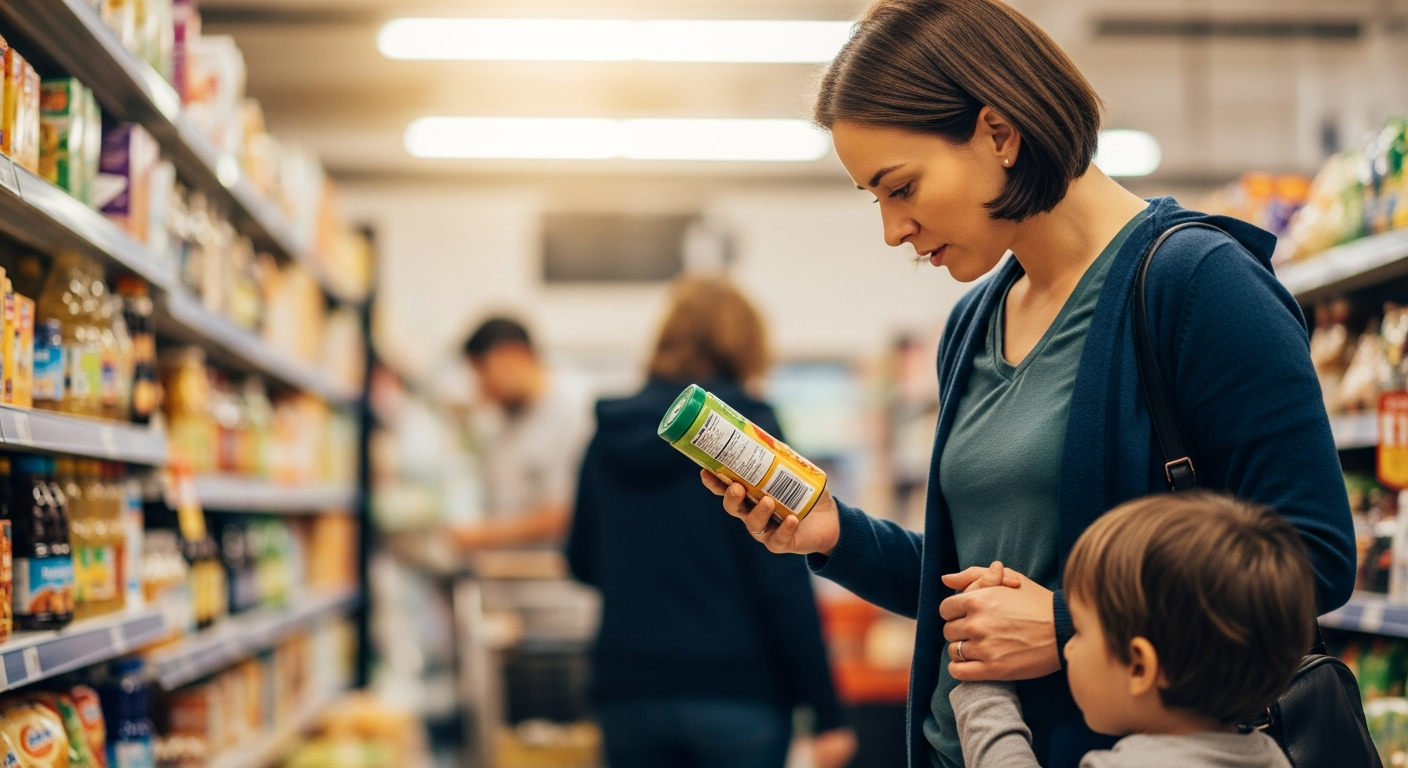
New Study: BPA Substitute BPS Damages Sperm Development in Offspring
That "BPA-Free" label on your water bottle, baby products, and food containers? It may be hiding a chemical that's just as harmful. A peer-reviewed study published April 16, 2026 in the journal Small found that maternal exposure to Bisphenol S (BPS), the most widely used BPA replacement, impairs testicular development and sperm function in male offspring.
The study, led by researchers Bin Li, Xiaotong Ji, and Huifeng Yue, demonstrated that BPS exposure during pregnancy disrupts the immune-endocrine network in developing males. This is not a fringe finding. It adds to a growing body of evidence that the chemical industry's go-to BPA substitute may be causing the same reproductive damage that got BPA restricted in the first place.
What Came Before
BPA (Bisphenol A) became a household concern over the past decade after studies linked it to hormone disruption, obesity, and reproductive problems. Manufacturers responded by removing BPA and stamping "BPA-Free" on their products. But most consumers don't know this: the replacement chemical in the majority of these products is BPS, a structurally similar compound.
A 2020 literature review published in the International Journal of Environmental Research and Public Health found that 81% of people tested in the United States and seven Asian countries had detectable levels of BPS in their urine. The same review found that BPS decreased spermatogenesis at a dosage ten times lower than BPA in human fetal testis tissue. The substitute may actually be more potent than the original chemical it replaced.
Researchers at Harvard Law School's Petrie-Flom Center have called this pattern "regrettable substitution," where a banned or restricted chemical is replaced with a structural analogue that carries similar risks but has not yet attracted regulatory attention. As the center wrote in November 2024: "BPA-Free does not mean bisphenol-free."
Over 200 bisphenol compounds exist. Most lack adequate safety testing.
The Findings
The April 2026 study, published in Small (DOI: 10.1002/smll.202513075), focused on how maternal BPS exposure affects male offspring during critical developmental windows. The researchers found that BPS disrupts the immune-endocrine network, a system of signaling between immune cells and hormone-producing cells that is essential for normal testicular development.
In male offspring exposed to BPS through their mothers, the researchers documented impaired testicular development and compromised sperm function. The mechanism involves disruption of the coordinated signaling between immune cells and Leydig and Sertoli cells in the testes, which are responsible for testosterone production and sperm maturation.
BPS reproductive harm has been flagged before. A 2021 study in Toxicology Letters found that BPS decreased sperm count and motility, increased sperm deformity, promoted oxidative stress, and caused structural changes in seminiferous tubules in mice at 200 mg/kg doses. A 2025 study in the International Journal of Molecular Sciences linked higher BPS exposure to significantly lower serum estradiol in middle-aged males and increased risk of reproductive dysfunction.
In January 2026, McGill University researchers tested four BPA alternatives (including BPS) on human ovarian cells. They found altered gene activity for cell growth and DNA repair, and concluded that "BPA-free is an incredibly misleading label." The study was published in Toxicological Sciences.
What makes the new Small study significant is that it identifies a specific mechanism, immune-endocrine disruption, and shows that the damage occurs during fetal development through maternal exposure rather than through direct adult exposure.
Where BPS Hides
BPS enters the body through multiple pathways. The chemical is used in food can linings, beverage containers, hard plastics, and thermal receipt paper. A 2013 study published in Environmental Health Perspectives found that receipt paper accounts for more than 88% of human BPS exposure from paper handling alone.
Food packaging remains the bigger concern. When the European Union banned BPA in food contact materials in January 2025 (covering plastics, coatings, varnishes, inks, and adhesives), manufacturers shifted further toward BPS and other analogues. No U.S. law forces companies to disclose what chemical replaced BPA in their products.
The result: consumers who specifically seek out "BPA-Free" products may be getting equal or greater exposure to a chemical with similar endocrine-disrupting properties.
Regulators Are Moving Slowly
California became the first U.S. state to formally recognize BPS as a reproductive toxicant. The state's Office of Environmental Health Hazard Assessment (OEHHA) added BPS to the Proposition 65 list for female reproductive toxicity in December 2023, then expanded the listing to include male reproductive toxicity in December 2025. No safe-harbor exposure level has been established, meaning any detectable exposure could trigger a violation.
The European Food Safety Authority (EFSA) reassessed BPA and found the safe exposure level should be 20,000 times lower than previously determined. The EU acted on that assessment with a ban. The FDA has not. As of January 2026, the agency had gone more than 1,320 days without deciding on a 2022 petition to limit BPA in food contact materials, according to the Environmental Defense Fund.
Washington State's 2023 Safer Products Act banned bisphenol-based beverage can liners, one of the few state-level actions targeting BPA substitutes directly.
What You Can Do
The science is clear: BPS carries reproductive risks comparable to, and in some cases greater than, BPA. The "BPA-Free" label does not mean a product is free from bisphenol compounds.
To reduce your exposure, start with these changes. Choose glass or stainless steel containers for food and beverages. Decline paper receipts or handle them briefly, since thermal paper is a major BPS exposure source. Stop microwaving food in plastic containers, even those labeled BPA-free. Look for Proposition 65 warnings on products sold in California.
VeriFoods tracks bisphenol contamination as part of its product safety analysis, scanning for BPA, BPS, BPF, and other bisphenol variants across thousands of food products. You can check specific products before you buy.
Stay ahead of the label.
Get early access to VeriFoods and be the first to see what's really in your food.
Sources
- Small (Nano-Micro) - "Maternal Bisphenol S Exposure Impairs Testicular Development and Sperm Function in Male Offspring by Disrupting the Immune-Endocrine Network" - April 16, 2026. https://doi.org/10.1002/smll.202513075
- International Journal of Environmental Research and Public Health - "Bisphenol S in Food Causes Hormonal and Obesogenic Effects Comparable to or Worse than Bisphenol A: A Literature Review" - 2020. https://pmc.ncbi.nlm.nih.gov/articles/PMC7071457/
- ScienceDaily / McGill University - "Scientists question the safety of BPA-free packaging" - January 14, 2026. https://www.sciencedaily.com/releases/2026/01/260114084134.htm
- Harvard Law Petrie-Flom Center - "BPA-Free Does Not Mean Bisphenol-Free and How Regulators Are Grappling to Deal with It" - November 25, 2024. https://petrieflom.law.harvard.edu/2024/11/25/bpa-free-does-not-mean-bisphenol-free-and-how-regulators-are-grappling-to-deal-with-it/
- Environmental Defense Fund - "The European Union marks one year of its BPA ban -- where is the FDA?" - January 12, 2026. https://blogs.edf.org/health/2026/01/12/the-european-union-marks-one-year-of-its-bpa-banwhere-is-the-fda/
- California OEHHA - "Bisphenol S (BPS) Added to the Proposition 65 List for Reproductive Toxicity" - December 2023 / expanded December 2025. https://oehha.ca.gov/proposition-65/crnr/bisphenol-s-bps-added-proposition-65-list-reproductive-toxicity
- Environmental Health Perspectives - "Thermal Reaction: The Spread of Bisphenol S via Paper Products" - 2013. https://pmc.ncbi.nlm.nih.gov/articles/PMC3621184/
Related Articles
BPA Replacements May Be Just as Harmful as BPA Itself
McGill University study finds BPA substitutes in food packaging disrupt thousands of genes and kill up to 75% of human...

EWG Proposes PFAS Standards That Fully Protect Children’s Health
In the almost 20 years since water pollution with toxic fluorinated chemicals, or PFAS, erupted as a public health...
FDA Kills 35 PFAS Food Packaging Uses While Study Exposes Drug-to-Tap Pipeline
On January 6, 2025, the FDA revoked 35 authorizations for PFAS grease-proofing in food packaging. That same day, a PNAS...