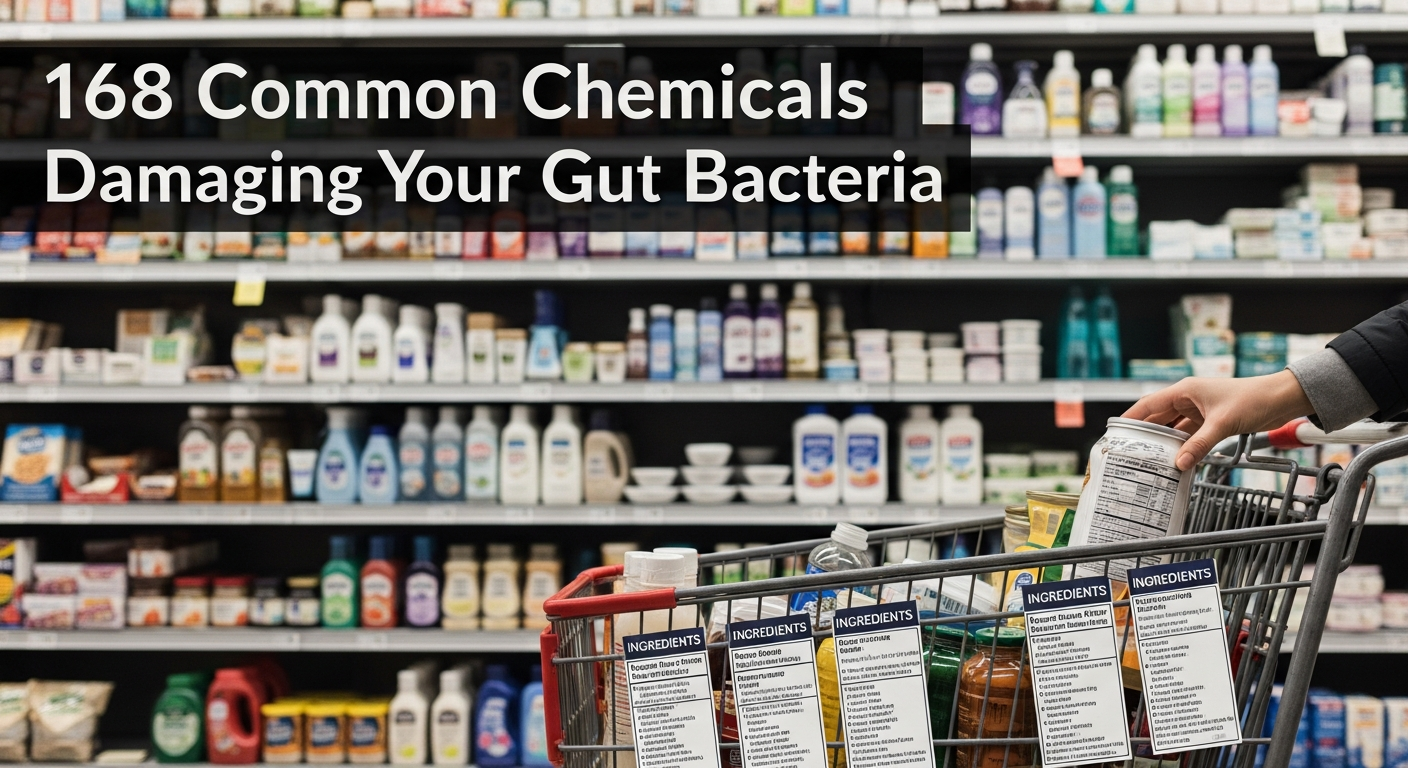
168 Common Chemicals Found to Damage Your Gut Bacteria, Cambridge Study Reveals
The bacteria living in your gut do far more than digest food. They train your immune system, produce vitamins, regulate inflammation, and communicate with your brain. A growing body of research suggests they may be one of the most important determinants of your overall health. Now, a landmark study from the University of Cambridge has identified a previously hidden threat to these essential microbes.
Published in Nature Microbiology in November 2025, the study tested 1,076 chemical contaminants against 22 species of gut bacteria in laboratory conditions. The result: 168 common chemicals were found to disrupt the growth of beneficial gut bacteria. Many of these substances were not previously believed to affect bacteria at all.
What the Researchers Found
The Cambridge team, working in the largest study of its kind on chemical-microbiome interactions, systematically exposed gut bacteria to chemicals that humans routinely encounter through food, drinking water, and environmental exposure.
The 168 harmful chemicals include:
- Pesticides: herbicides, insecticides, and fungicides commonly applied to food crops
- Industrial compounds: chemicals used in flame retardants and manufacturing
- Plastics compounds: substances that leach from food packaging and containers
- Environmental pollutants: chemicals that accumulate in soil and water
Fungicides and industrial chemicals showed the most widespread impact, with approximately 30% of tested compounds in these categories exhibiting anti-gut-bacterial properties.
The implications are significant. These are not exotic chemicals found only in industrial settings. They are compounds that enter the average person's body through everyday activities: eating conventionally grown produce, drinking tap water, microwaving food in plastic containers, sitting on flame-retardant-treated furniture.
The Antibiotic Resistance Connection
The study uncovered a particularly alarming secondary finding. When gut bacteria are exposed to these chemical pollutants, some change how they function in an attempt to survive. In certain cases, this adaptation also makes the bacteria resistant to clinical antibiotics, including ciprofloxacin, a commonly prescribed antibiotic used to treat serious infections.
This means the same chemicals contaminating our food may be contributing to one of the most pressing global health crises: antibiotic resistance. The World Health Organization has identified antimicrobial resistance as one of the top 10 global public health threats facing humanity, and this research suggests the food system may be an unrecognized driver.
A Machine Learning Breakthrough
Beyond identifying harmful chemicals, the Cambridge researchers developed a machine learning model capable of predicting which industrial chemicals are likely to damage gut bacteria, even before laboratory testing is conducted.
This is a significant advancement. There are tens of thousands of synthetic chemicals in commercial use, and testing each one individually against gut bacteria is prohibitively slow and expensive. The predictive model could accelerate screening by orders of magnitude, flagging the most concerning chemicals for priority testing.
The model was trained on the patterns identified in the 1,076-chemical dataset and can assess new chemicals based on their molecular structure and properties. It represents a shift from reactive testing to proactive prediction in chemical safety assessment.
Why Your Gut Microbiome Matters
The human gut microbiome contains trillions of bacteria, collectively weighing 2 to 5 pounds, that perform functions essential to health. Disruption of this community, a condition known as dysbiosis, has been linked to a growing list of chronic conditions:
- Inflammatory bowel disease (Crohn's disease, ulcerative colitis)
- Obesity and metabolic syndrome
- Type 2 diabetes
- Depression, anxiety, and other mental health conditions
- Autoimmune disorders
- Allergies and asthma
- Colorectal cancer
Research published separately in December 2025 found that common food emulsifiers consumed by mothers can alter their offspring's gut microbiome from the very first weeks of life, interfering with normal immune system development and increasing vulnerability to gut disorders and obesity in adulthood. This suggests the damage from food chemicals may extend across generations.
The Regulatory Gap
The Cambridge findings highlight a fundamental flaw in how chemical safety is assessed. Current regulatory frameworks evaluate whether a chemical is directly toxic to human cells, but they do not typically consider effects on gut bacteria.
This means a chemical can pass safety evaluations and be approved for use in food production, packaging, or agriculture while actively destroying the microbial communities that humans depend on for health. The 168 chemicals identified in this study are legal and widely used.
A comprehensive review published in The FASEB Journal in 2025 documented the detrimental roles of food additives, including preservatives, emulsifiers, and artificial sweeteners, on gut health, reinforcing the Cambridge team's findings from a different analytical angle.
What You Can Do
While regulatory frameworks catch up to the science, there are practical steps to reduce your exposure to gut-disrupting chemicals:
- Choose organic produce when possible to reduce pesticide exposure
- Avoid heating food in plastic containers, which accelerates chemical leaching
- Use glass or stainless steel food storage containers
- Filter your drinking water with a system certified to remove contaminants
- Read food labels for additives like emulsifiers (polysorbate 80, carboxymethylcellulose, carrageenan) linked to microbiome disruption
- Eat a diverse, fiber-rich diet to support microbiome resilience
Understanding which chemicals are present in the foods you buy is the first step toward protecting the microbial community that protects you.
Stay ahead of the label.
Get early access to VeriFoods and be the first to see what's really in your food.
Sources
Nature Microbiology - "Industrial and agricultural chemicals exhibit antimicrobial activity against human gut bacteria in vitro" - November 2025. https://www.nature.com/articles/s41564-025-02182-6
University of Cambridge - "Pesticides and other common chemical pollutants are toxic to our 'good' gut bacteria" - November 2025. https://www.cam.ac.uk/research/news/pesticides-and-other-common-chemical-pollutants-are-toxic-to-our-good-gut-bacteria
ScienceDaily - "Is your gut being poisoned? Scientists reveal the hidden impact of everyday chemicals" - December 2, 2025. https://www.sciencedaily.com/releases/2025/12/251202052215.htm
SciTechDaily - "Hundreds of Everyday Chemicals Found To Damage Beneficial Gut Bacteria" - December 2025. https://scitechdaily.com/hundreds-of-everyday-chemicals-found-to-damage-beneficial-gut-bacteria/
The New Lede - "Common pesticides and plastic chemicals stifle healthy gut bacteria" - November 2025. https://www.thenewlede.org/2025/11/pesticides-gut-microbiome-bacteria/
ScienceDaily - "This common food ingredient may shape a child's health for life" - December 25, 2025. https://www.sciencedaily.com/releases/2025/12/251225080732.htm
Related Articles
168 Everyday Chemicals Are Destroying Your Gut Bacteria, Landmark Cambridge Study Finds
A University of Cambridge study published in Nature Microbiology screened 1,076 chemicals and found 168 are toxic to...
The EPA Just Approved More 'Forever Chemical' Pesticides on Your Food
In November 2025, the EPA approved multiple PFAS-containing pesticides for use on food crops including oranges,...
Toxic Chemicals in Your Food Are Costing the World $3 Trillion a Year
A landmark December 2025 report reveals that just four groups of toxic chemicals in the global food system are causing...