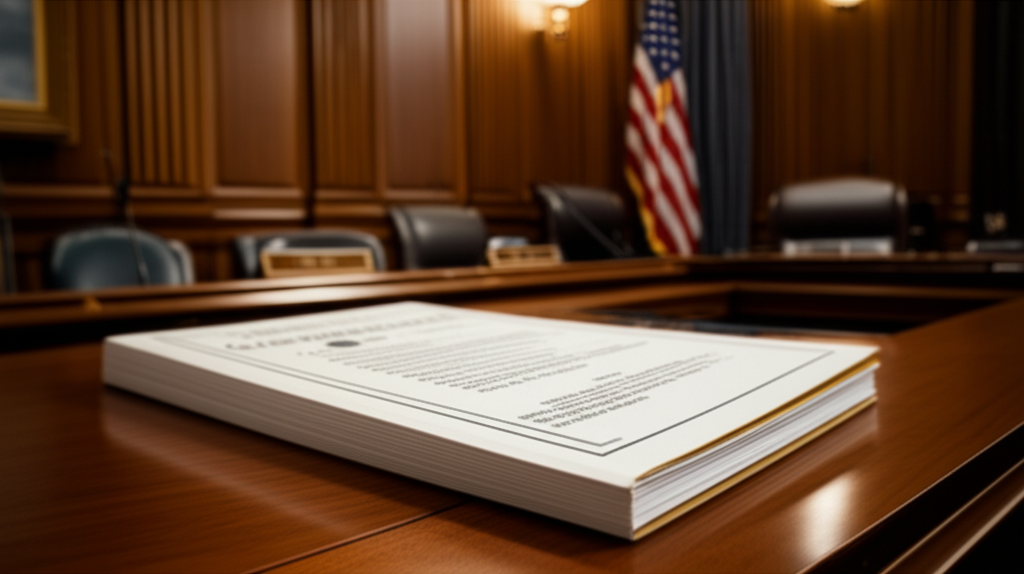
MAHA Commission Report Calls for Sweeping Food Reforms Amid Citation Controversy
White House health assessment links childhood chronic disease crisis to food additives and calls for elimination of self-affirmed GRAS pathway affecting 1,000+ chemicals
Lead:
The White House has released a landmark report declaring American children's health is in crisis—and placing the blame squarely on the food we eat. The first assessment from the President's "Make America Healthy Again" (MAHA) Commission, released May 22, 2025, calls for the most significant overhaul of food additive regulations in decades, including the elimination of a controversial pathway that has allowed over 1,000 chemicals to enter the food supply without FDA review.
But the report's ambitious reform agenda has been overshadowed by credibility problems, including citations to non-existent studies and references to Wikipedia as a source—issues the White House attributed to "formatting errors."
A Bleak Assessment of Children's Health
The MAHA Commission's 100-page report, titled "Make Our Children Healthy Again: Assessment," paints a sobering picture of pediatric health trends. According to the report, childhood obesity has increased 270% since the 1970s, with more than one in five children over age 6 now classified as obese. Pre-diabetes affects more than one in four teenagers. Childhood cancer incidence has risen nearly 40% since 1975, and autism spectrum disorder now impacts 1 in 31 children by age 8.
"America's children are facing an unprecedented health crisis," the report states, linking these conditions to what it describes as a "toxic food environment" dominated by ultra-processed foods, synthetic additives, and agricultural chemicals.
The commission, established by Executive Order 14212 on February 13, 2025, is chaired by Health and Human Services Secretary Robert F. Kennedy Jr., who has been given unprecedented authority to direct FDA priorities. The report reflects Kennedy's long-standing concerns about environmental toxins and what he terms "corporate capture" of regulatory agencies.
The GRAS Problem: 1,000 Chemicals, Minimal Oversight
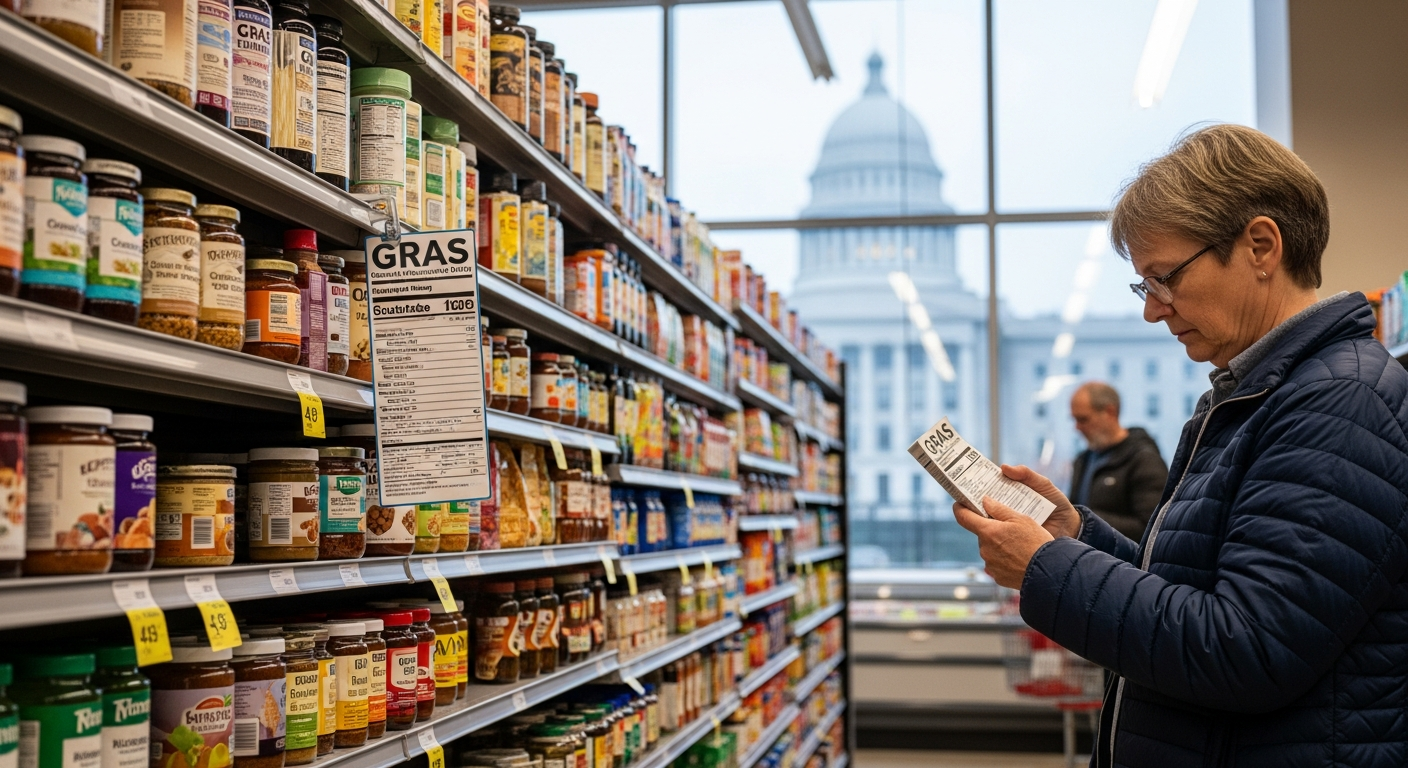
At the heart of the report's regulatory reform agenda is the self-affirmed GRAS (Generally Recognized As Safe) pathway—a mechanism established by FDA guidance in 1997 that allows food manufacturers to determine an ingredient's safety without notifying the agency.
"The self-affirmed GRAS pathway has allowed over 1,000 chemicals to enter the food supply without adequate FDA review," the report states. "Corporate capture of regulatory agencies has allowed harmful chemicals to persist in our food supply."
The chemical industry's response to potential reform has been significant: the report cites $77 million in lobbying expenditures in 2024 alone. Consumer advocacy groups have long criticized the GRAS system as an outlier among developed nations, noting that the European Union requires pre-market approval for all food additives.
Elimination of the self-affirmed pathway would represent the most consequential change to food additive regulation since the 1958 Food Additives Amendment, potentially subjecting hundreds of currently used ingredients to formal safety reviews.
Credibility Under Scrutiny
Despite the report's ambitious reform agenda, its credibility has been undermined by significant sourcing problems. Independent journalists and researchers identified multiple references to studies that do not exist. The original report also cited Wikipedia as a source—a practice generally avoided in government and scientific documents.
The White House acknowledged these errors but characterized them as "formatting issues" rather than substantive problems. However, the citation failures have provided ammunition for critics who question the report's scientific rigor.
Medical and scientific experts have raised additional concerns. The British Medical Journal published analysis noting that the report questions established public health measures including vaccines and water fluoridation—positions that align with Kennedy's controversial views but contradict mainstream medical consensus.
The Guardian's investigative coverage revealed another significant omission: while the report extensively documents chronic disease trends, it largely excludes firearms and motor vehicle accidents—leading causes of childhood mortality—from its assessment of threats to children's health.
What Happens Next
The report launches an 82-day countdown for the development of a comprehensive "Make Our Children Healthy Again Strategy," expected by August 2025. This follow-up document will presumably detail implementation plans for the recommended reforms.
For consumers, the immediate implications remain unclear. The report itself carries no regulatory force; actual changes to FDA procedures would require either rulemaking or congressional action. Previous legislative efforts to reform the GRAS system have stalled in Congress amid industry opposition.
However, the commission's establishment signals a significant shift in federal health policy priorities. Whether the credibility issues will derail reform efforts—or whether legitimate concerns about childhood health will overcome skepticism about the messenger—remains to be seen.
Key Takeaways
| Issue | What You Need to Know |
|---|---|
| The GRAS System | The self-affirmed pathway lets manufacturers determine ingredient safety without FDA notification—a practice the EU and many countries don't allow |
| Childhood Health Trends | Obesity up 270% since 1970s; 1 in 4 teens has pre-diabetes; childhood cancer up 40% since 1975 |
| Industry Opposition | Chemical industry spent $77M lobbying in 2024; significant resistance to reform expected |
| Report Credibility | Multiple fake citations and Wikipedia sourcing identified; White House called these "formatting issues" |
| Next Steps | 82-day deadline for comprehensive strategy; actual regulatory changes require additional action |
Stay ahead of the label.
Get early access to VeriFoods and be the first to see what's really in your food.
Sources
White House Official MAHA Report (Primary Source)
- Document: "Make Our Children Healthy Again: Assessment" (PDF)
- URL: https://www.whitehouse.gov/wp-content/uploads/2025/05/MAHA-Report-The-White-House.pdf
- Status: Official government report
HHS Press Release (Government Source)
- Title: "MAHA Commission Identifies Root Causes of Childhood Chronic Disease"
- URL: https://www.hhs.gov/press-room/maha-commission-childhood-chronic-disease-root-causes.html
- Status: Official administration messaging
The Guardian (Critical Analysis)
- Title: "RFK's health report omits key facts in painting dark vision of American children's health"
- URL: https://www.theguardian.com/us-news/2025/may/22/rfk-maha-health-report-children
- Status: Investigative coverage of omissions and credibility issues
The New York Times (News Report)
- Title: "Kennedy and Trump Paint Bleak Picture of Chronic Disease in U.S. Children"
- URL: https://www.nytimes.com/2025/05/22/us/politics/rfk-jr-maha-report-children-health.html
- Status: Coverage of release event and political context
BMJ (British Medical Journal) (Scientific Context)
- URL: https://www.bmj.com/content/389/bmj.r1111
- Status: Peer-reviewed medical perspective on report credibility
Related Articles

BHA Has Been a Probable Carcinogen for 30 Years. The FDA Is Finally Acting.
The National Toxicology Program classified BHA as a probable human carcinogen in the 1990s. It kept appearing on...
The GRAS Loophole Is Closing: Senate Bill Would Force Companies to Disclose Every Food Ingredient to FDA
The Better Food Disclosure Act, introduced November 6, 2025, would end the self-affirmed GRAS pathway that has allowed...