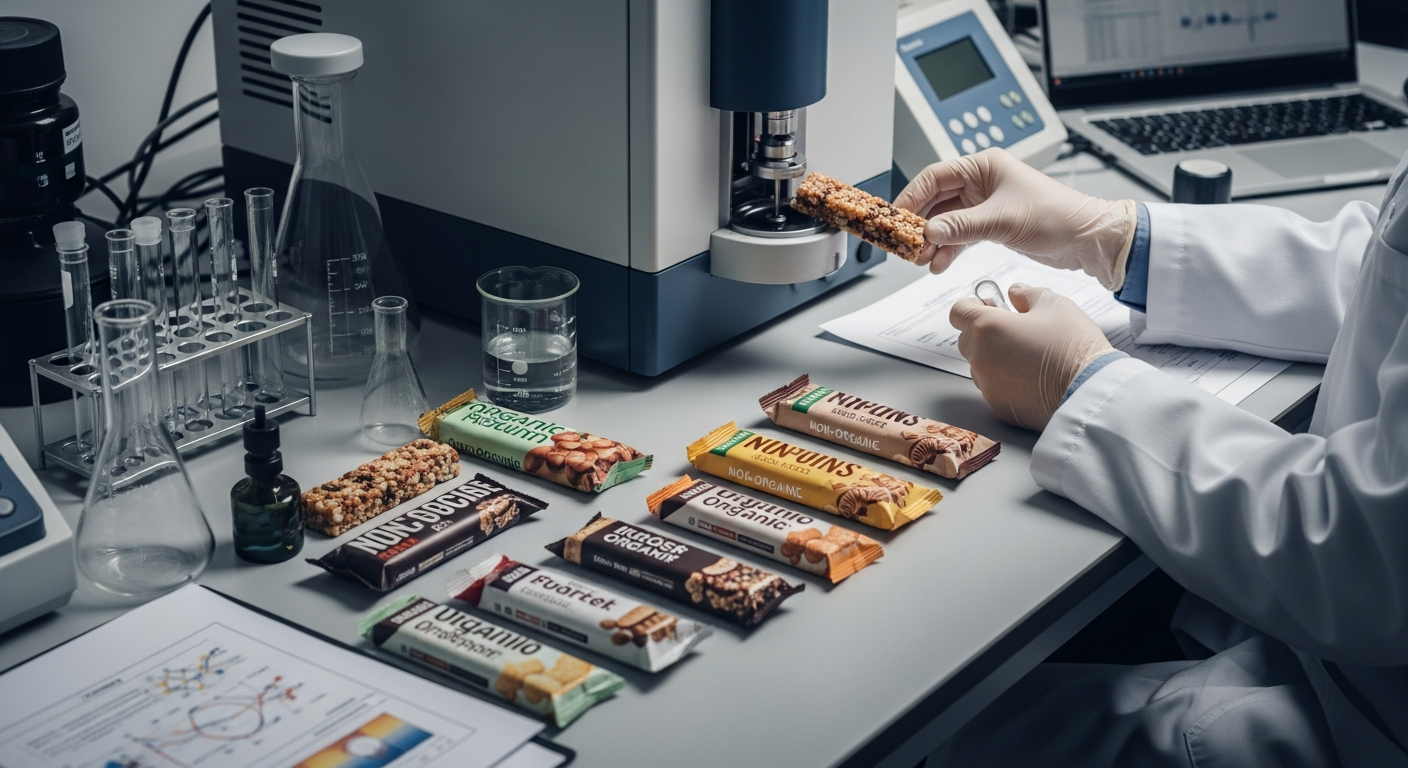
Every Snack Bar Tested Contains Heavy Metals, and Organic Bars Have More
The snack bar you grabbed this morning because it seemed like a healthy choice almost certainly contains heavy metals. According to the Clean Label Project, a nonprofit testing organization, 100% of the 165 popular snack and nutrition bars it tested contained detectable levels of heavy metals. More than one in five exceeded California's Prop 65 limits for lead.
The findings, published in June 2025, challenge the assumption that packaged health foods are actually safe. They also expose a troubling irony: organic-certified bars had 28% more heavy metals on average than conventional alternatives.
What the Study Found
The Clean Label Project tested 165 snack and nutrition bars from 50 major brands, collecting over 20,000 individual data points. Products were sourced from Nielsen, SPINS, and Amazon's best-seller lists, meaning these are the bars Americans buy most often.
Researchers examined six categories of contamination: heavy metals, pesticides, glyphosate, bisphenols (BPA and BPS), phthalates, and acrylamide. The heavy metals findings were the most alarming.
Every single product contained detectable levels of heavy metals. Twenty-two percent of bars exceeded California's Proposition 65 action level for lead, a threshold designed to trigger consumer warnings. Six percent exceeded the Prop 65 level for cadmium. No bars earned the Clean Label Project's full certification.
The study also revealed that products carrying "organic," "non-GMO," or "free-from" labels did not perform better. Certified-organic bars contained 28% more heavy metals on average than their conventional counterparts, according to the Clean Label Project.
Why Organic Bars Tested Worse
The organic paradox is not as contradictory as it sounds. Heavy metal contamination in food comes primarily from the soil, water, and raw ingredients, not from the manufacturing process that organic certification addresses.
Cocoa, rice, nuts, and certain seeds are known to accumulate heavy metals from the earth where they grow. Organic farming practices do not prevent arsenic, cadmium, or lead from entering the soil through natural geological deposits, industrial pollution, or decades of contaminated irrigation water. Because many organic bars rely heavily on ingredients like brown rice protein, cacao, and almonds, they can actually concentrate these contaminants.
This does not mean organic food is worse overall. Organic certification prevents exposure to synthetic pesticides and herbicides, which carry their own health risks. But on the specific question of heavy metals, the organic label offers no protection.
The "Clean 16" and Kids Bars
While no products passed full certification, the Clean Label Project identified 16 bars with the lowest contaminant levels across all six categories, calling them the "Clean 16."
One genuinely positive finding: bars marketed specifically for children generally performed better. Kids-labeled bars had significantly lower levels of heavy metals, pesticides, and phthalates than their adult counterparts. This may reflect stricter internal standards some manufacturers apply to children's products, or differences in ingredient sourcing.
Why This Matters for Your Health
Lead, cadmium, arsenic, and mercury are toxic at any level of exposure. The body accumulates these metals over time because it cannot efficiently eliminate them. Chronic low-level exposure, the kind that comes from eating a contaminated snack bar every day, has been linked to kidney damage, cardiovascular disease, cognitive decline, and cancer.
Children face elevated risk because their smaller body weight means the same amount of contamination represents a proportionally larger dose. Pregnant women also face heightened concern, as heavy metals can cross the placenta and affect fetal development.
California's Proposition 65 limits exist precisely because of these risks. When 22% of popular snack bars exceed the state's lead threshold, it signals a systemic problem in the food supply, not an isolated incident.
What This Means for You
The 100% contamination rate does not mean you should never eat a snack bar again. It means you cannot rely on labels, marketing claims, or price point to judge a product's safety.
Here is what you can do. First, check whether your usual bar made the Clean 16 list on the Clean Label Project's website. Second, rotate your snack choices rather than eating the same bar daily, which helps limit accumulation of any one contaminant. Third, prioritize bars with simpler ingredient lists, as fewer processed ingredients generally mean fewer opportunities for contamination.
Apps like VeriFoods that analyze products for contaminants including heavy metals can help identify which specific products in your grocery store have been tested and what the results showed.
The broader takeaway is that "healthy" food marketing and actual food safety are two different things. Until manufacturers are required to test and disclose heavy metal levels, consumers are left guessing, and studies like this one suggest the guesses are often wrong.
Stay ahead of the label.
Get early access to VeriFoods and be the first to see what's really in your food.
Sources
- Clean Label Project - "Snack and Nutrition Study" - June 2025. https://cleanlabelproject.org/snack-and-nutrition-study/
- LiveNOW from FOX - "Heavy metals found in popular snack, nutrition bars, study reveals" - June 2025. https://www.livenowfox.com/news/heavy-metals-found-popular-snack-nutrition-bars-study
- Men's Fitness - "Heavy Metals and Pesticides Found in Popular Snack Bars" - June 2025. https://www.mensfitness.com/news/clean-label-project-snack-and-nutrition-bars
- FOX 32 Chicago - "Heavy metals found in popular snack, nutrition bars, study reveals" - June 2025. https://www.fox32chicago.com/news/heavy-metals-found-popular-snack-nutrition-bars-study