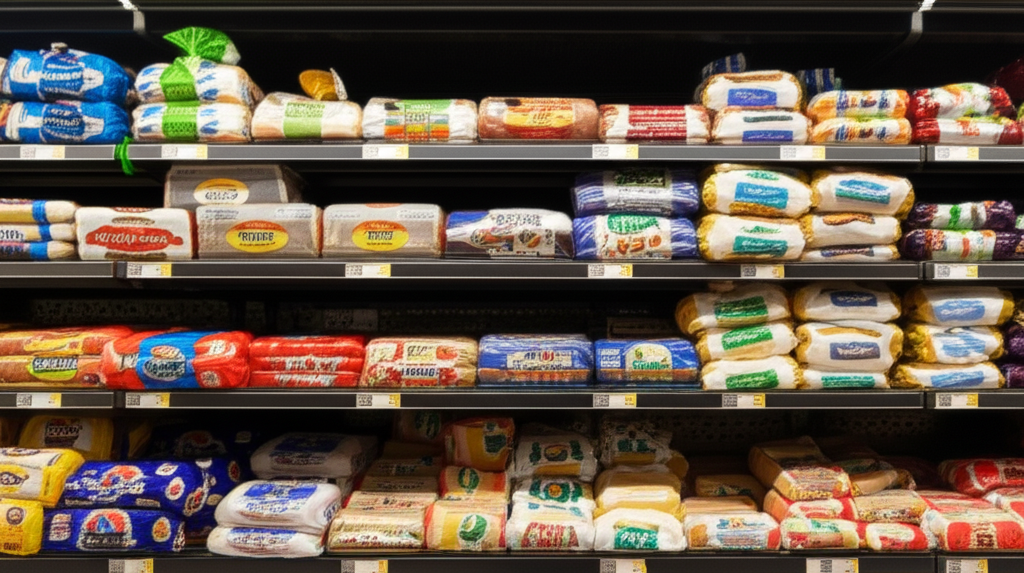
Florida Tests Find Glyphosate in 75% of Popular Bread Brands
Six out of eight popular bread products sold in American grocery stores contain glyphosate, the weed-killing chemical found in Monsanto's Roundup. That is 75% of the breads tested by the Florida Department of Health, according to results released February 5, 2026, under the state's Healthy Florida First initiative.
Nature's Own Butter Bread had the highest levels at 190.23 parts per billion. Nature's Own Perfectly Crafted White followed at 132.34 ppb. Even two varieties of Dave's Killer Bread, which carry organic certification and non-GMO labels, tested positive at 10 to 12 ppb.
Bread is a daily staple for millions of American families. These results suggest that low-level pesticide exposure from one of the most basic foods in the American diet is not a hypothetical risk. It is happening at breakfast tables every morning.
What Glyphosate Is and How It Gets Into Bread
Glyphosate is the world's most widely used herbicide. Monsanto (now owned by Bayer) introduced it in 1974 under the brand name Roundup. It is applied across American agriculture on crops ranging from corn and soybeans to wheat and oats.
For wheat specifically, glyphosate serves a dual purpose. Beyond weed control during the growing season, many conventional wheat farmers spray it directly on their crop shortly before harvest, a practice called pre-harvest desiccation. The chemical kills and dries the wheat plants, making them easier to harvest on a uniform schedule. That late-season application is a primary reason glyphosate residues show up in grain-based products like bread, cereal, and crackers.
In 2015, the World Health Organization's International Agency for Research on Cancer classified glyphosate as "probably carcinogenic to humans," as reported by The New Lede on February 6, 2026. The EPA maintains that glyphosate is safe at current exposure levels. That disagreement between international and domestic regulators has fueled a decade of lawsuits, scientific debate, and consumer anxiety.
What Florida Found
The Florida Department of Health tested eight bread products from five national brands. The results, published by the Governor's Office on February 5, 2026, broke down as follows:
Products that tested positive for glyphosate:
- Nature's Own Butter Bread: 190.23 ppb
- Nature's Own Perfectly Crafted White: 132.34 ppb
- Wonder Bread Classic White: detected (specific level reported by CBS 12 as "triple-digit")
- Sara Lee Honey Wheat: detected
- Dave's Killer Bread White Done Right: 11.85 ppb
- Dave's Killer Bread 21 Whole Grain: 10.38 ppb
Two of the eight products tested below detectable limits.
The finding that Dave's Killer Bread, an organic-certified brand, tested positive is notable. Organic certification prohibits the intentional use of synthetic pesticides, but it does not guarantee zero contamination. Cross-contamination during processing, storage, or transport, along with environmental drift from neighboring conventional farms, can leave trace residues in organic products.
According to Food Safety Magazine's February 10, 2026 analysis, the Environmental Working Group sets a child safety threshold for glyphosate at 0.01 milligrams per day. A child could reach that threshold by eating just 60 grams (roughly two slices) of bread contaminated at 160 ppb. Nature's Own Butter Bread, at 190.23 ppb, exceeds that concentration.
By contrast, EPA tolerances for glyphosate residues on crops range from 0.1 to 400 parts per million, orders of magnitude higher than the levels found in these bread products. The gap between the EPA's federal limits and the EWG's child-focused thresholds illustrates why this debate generates so much friction between industry and consumer health advocates.
What Officials and Industry Are Saying
Florida State Surgeon General Dr. Joseph A. Ladapo stated that "chronic exposure to glyphosate is linked to harmful gut microbiome changes, liver inflammation, and adverse neurologic effects," as reported by The New Lede. He added: "Bread is a staple food for many Florida families, and they should be able to consume it without worrying about toxins."
First Lady Casey DeSantis, who has championed the Healthy Florida First initiative, said: "Consumers deserve to know what chemical contaminants are in their food so that they can make informed decisions," according to the Governor's Office press release.
Grain and baking industry associations pushed back. In a statement cited by Food Safety Magazine, they accused the testing program of actions that "needlessly scare consumers about trace levels of glyphosate that do not present genuine risks." Industry groups point to the EPA's established tolerances and note that the detected levels fall well within federally approved limits. No recalls have been issued or required.
Food Safety Magazine's analysis also noted the report lacks important methodological details, including lab detection limits and health thresholds, making it difficult for outside scientists to fully evaluate the findings.
The Bigger Picture: Florida's Expanding Food Testing Program
The bread results are the third round of testing under the Healthy Florida First initiative. Previous rounds examined 24 infant formula products for mercury, arsenic, and lead, and 46 candy products for arsenic, according to CBS 12's February 9, 2026 report.
Governor DeSantis has backed the program with $5 million in the proposed FY 2026-2027 state budget, according to the Governor's Office. Florida is now effectively doing at the state level what consumer advocates have long argued the federal government should be doing: testing widely available food products for specific contaminants and publishing the results publicly.
Whether other states follow Florida's lead could depend on how consumers and the food industry respond to these findings. The data is now public. The brands are named. The numbers are specific. What happens next is a question of whether consumers demand change, and whether the food industry decides that the cost of reformulation is less than the cost of continued scrutiny.
What This Means for You
If you eat bread regularly (and most Americans do), these results raise a practical question: how do you reduce your glyphosate exposure without eliminating bread from your diet?
A few options based on what the data shows.
Be skeptical of labels. Organic certification reduces pesticide exposure significantly, but as the Dave's Killer Bread results demonstrate, it does not eliminate it entirely.
Look at specific products rather than relying on brand reputation alone. Within the same brand (Nature's Own), contamination levels varied between products.
Consider breads made from grains that are less commonly treated with glyphosate as a desiccant. Rice-based breads and certain heritage wheat varieties are worth exploring.
Consumer-facing tools like VeriFoods allow shoppers to scan product barcodes and check whether independent testing has found pesticide residues, heavy metals, or other contaminants in specific items. That kind of product-level data fills the gap between broad federal safety standards and the more protective thresholds recommended by organizations like the EWG.
The Florida results confirm what independent testing has shown for years: glyphosate is in everyday food, at levels that regulators disagree about. The brands, the products, and the concentrations are now a matter of public record. What you do with that information is up to you.
Stay ahead of the label.
Get early access to VeriFoods and be the first to see what's really in your food.
Sources
- https://www.flgov.com/eog/news/press/2026/florida-releases-bread-testing-results-under-healthy-florida-first-initiative
- https://www.thenewlede.org/2026/02/florida-tests-show-glyphosate-in-popular-breads/
- https://www.food-safety.com/articles/11118-floridas-latest-food-contaminant-testing-report-focuses-on-glyphosate-in-bread
- https://cbs12.com/news/local/florida-health-news-tests-find-triple-digit-levels-of-weed-killer-chemicals-in-popular-bread-brands
Related Articles
Trump Grants Glyphosate Makers Legal Immunity Under Defense Production Act
On February 18, 2026, President Trump signed an executive order that grants legal immunity to manufacturers of...
These Four Foods Are High In Pesticides – Try Organic To Reduce Your Exposure
Since 2004, EWG’s Shopper’s Guide to Pesticides in Produce™ has helped Americans choose the fruits and vegetables that...
Glyphosate Cuts Birth Weights Across Rural America, 9 Million Births Study Finds
The most widely used herbicide in the United States is making babies smaller at birth. A study published in the...