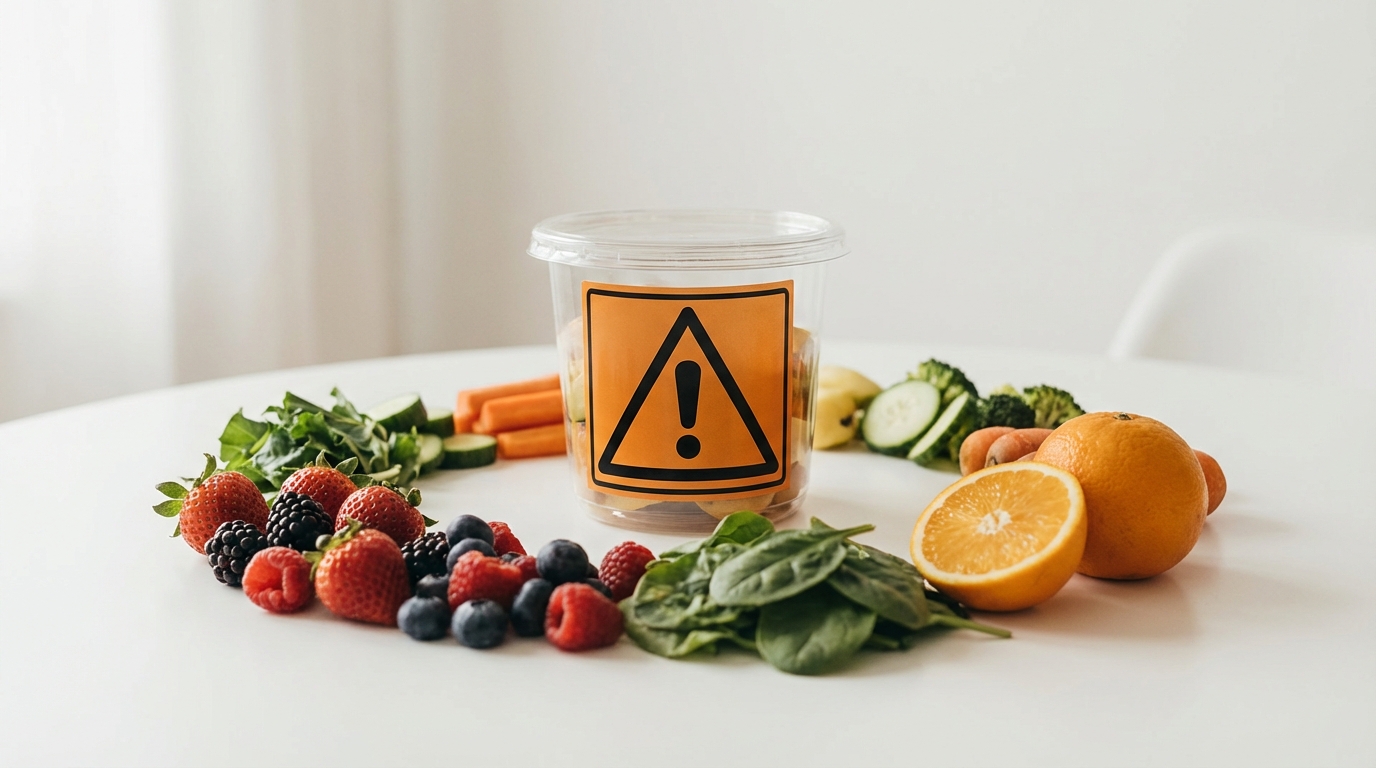
Texas Becomes First State to Require Warning Labels on Foods with Additives Banned in Other Countries
Texas Governor Greg Abbott signed SB 25, the "Make Texas Healthy Again" bill, mandating bold warning labels on packaged foods containing 44 chemical substances restricted in Australia, Canada, the EU, or the UK.
In a landmark move that positions Texas at the forefront of state-level food safety reform, Governor Greg Abbott on June 22, 2025 signed Senate Bill 25 - the "Make Texas Healthy Again Act" - requiring food manufacturers to display prominent warning labels on products containing any of 44 chemical additives banned or restricted in other developed nations.
The legislation, which takes effect January 1, 2027, marks the first time a U.S. state has enacted comprehensive warning label requirements referencing international regulatory standards for food additive safety. With 21 other state legislatures having introduced similar bills in 2025, Texas's action signals a growing state-level movement to address what advocates call a "regulatory gap" in federal food safety oversight.
What You'll See on Food Labels
Starting in 2027, Texas shoppers will encounter a stark new warning on affected packaged foods:
"WARNING: This product contains an ingredient that is not recommended for human consumption by the appropriate authority in Australia, Canada, the European Union, or the United Kingdom."
The law mandates specific formatting requirements to ensure visibility:
- Font size: No smaller than the smallest font used for other consumer information on the package
- Placement: Prominent location that's "reasonably visible" to consumers
- Contrast: High contrast with background to ensure readability
- Online sales: The warning must also appear on manufacturer and retailer websites
These requirements mirror the approach California has taken with Prop 65 warnings for chemicals known to cause cancer or reproductive harm - but applied specifically to food additives deemed unsafe by international regulatory bodies.
The 44 Additives Covered
The law targets chemical substances that have been restricted or banned in at least one of four major regulatory jurisdictions: Australia, Canada, the European Union, or the United Kingdom. While the full list includes 44 specified substances, the additives fall into several key categories:
Synthetic Food Colors
Multiple artificial food dyes still widely used in American processed foods face restrictions in Europe and other markets.
Preservatives
Chemicals like propylparaben - used to extend shelf life in baked goods - are restricted in the EU due to concerns about endocrine disruption.
Processing Aids
Potassium bromate, used as a flour improver in commercial baking, is banned in the EU, UK, Canada, and many other countries due to its classification as a potential carcinogen.
Other Controversial Chemicals
- Titanium dioxide: Used as a whitening agent in candies and chewing gum, banned for food use in the EU in 2022
- Acetylated esters of mono- and diglycerides: Emulsifiers with restrictions in some international markets
- Lye: Certain applications face international restrictions
The law applies to packaged foods with labels developed or copyrighted on or after January 1, 2027.
What's Exempt
- Restaurant and prepared foods
- USDA-regulated products (meat and poultry)
- Already-warned products (Surgeon General warnings)
- Drugs and supplements
The Federal Preemption Question
A significant provision creates a federal preemption clause: the law automatically voids for any ingredient that federal law addresses. If the FDA determines an ingredient is safe, the Texas warning requirement ceases to apply for that substance.
Part of a Broader Movement
Texas's action comes amid a surge of state-level food safety legislation. According to Harvard's Center for Health Law and Policy Innovation, 35 states introduced 93 bills on food additives in 2025.
The "Make America Healthy Again" (MAHA) movement has provided political momentum for these efforts. Other MAHA-related actions in June 2025 include Ohio's school cell phone ban, Vermont's social media policy model, and Oklahoma's review of water fluoridation and artificial dyes.
What It Means for Consumers
For Texas shoppers, the practical impact will arrive gradually:
January 2027: New product labels must include warnings for affected additives
2027 and beyond: Increasing visibility of warnings as manufacturers update packaging
Consumers can expect two likely industry responses:
- Reformulation: Many manufacturers may choose to remove targeted additives to avoid the warning label
- Label compliance: Products retaining the additives will display the warning, allowing consumers to make informed choices
The FDA's Parallel Actions
The Texas law comes as the FDA itself pursues renewed scrutiny of food additives. On June 18, 2025, the FDA released a "Post-Market Assessment Prioritization Tool" to evaluate chemical safety. Chemicals currently under FDA review include BHT, BHA, and azodicarbonamide (ADA).
Additionally, the FDA approved three new natural food colors in June 2025, aligning with the FDA's April 2025 announcement to phase out certain synthetic food dyes by the end of 2026.
Looking Ahead
Texas's warning label law represents a significant experiment in state-level food chemical regulation. For consumers, the message is simple: by 2027, Texas grocery stores will offer unprecedented transparency about which products contain additives deemed unfit for human consumption by some of the world's most stringent regulatory bodies.
Sources: The Hill, Bureau Veritas, Haynes and Boone, Harvard CHLPI, Lexology
Stay ahead of the label.
Get early access to VeriFoods and be the first to see what's really in your food.
Related Articles
111 Chemicals Were Secretly Added to Your Food. The FDA Had No Idea.
At least 111 chemicals of unknown safety have been added to foods, drinks, and supplements sold in the United States...
West Virginia Signs Strictest Food Dye Ban in U.S. History as 20+ States Follow
On March 24, 2025, West Virginia Governor Patrick Morrisey signed into law the most comprehensive food additive ban any...
States Rush to Ban Artificial Food Dyes as West Virginia Makes History
On March 24, 2025, West Virginia Governor Patrick Morrisey signed HB 2354 into law, making his state the first in...