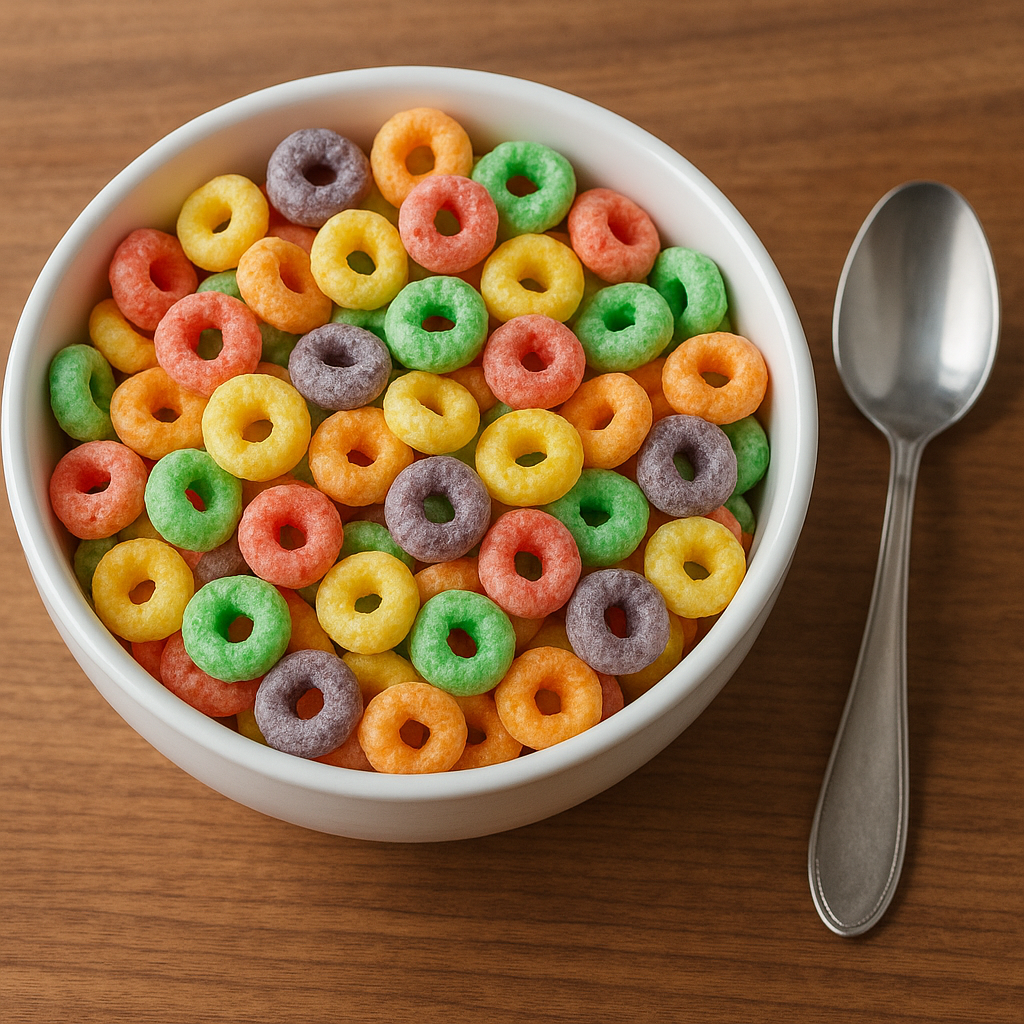
Companies Pledge to Remove Artificial Dyes by 2028: What It Means for Your Health
By VeriFoods
A significant shift is underway in the world of ice cream and frozen desserts. Dozens of major companies have pledged to remove artificial food dyes from their products by 2028, signaling a broader industry move away from synthetic color additives. This announcement follows a push from Health and Human Services Secretary Robert F. Kennedy Jr., who has called on food manufacturers to eliminate artificial additives from their offerings.
Why are companies moving away from artificial dyes?
The Food and Drug Administration (FDA) has recently stepped up its efforts to address concerns about synthetic food dyes. In April, FDA Commissioner Marty Makary announced plans to phase out several widely used artificial dyes by the end of next year, including Green 3, Red 40, Yellow 5, Yellow 6, Blue 1, and Blue 2. Notably, Red 3 is set to be banned in food by 2027 after studies linked it to cancer in laboratory rats, prompting calls to accelerate the timeline for its removal.
While the FDA is encouraging voluntary compliance from food manufacturers, it also intends to set clear standards and deadlines for transitioning to natural alternatives. The agency has stated it will revoke authorization for dyes that are no longer in production and will approve four new natural color additives.
Which companies are making the change?
Many leading U.S. food producers are already reformulating their products. According to Sensient Colors, a major supplier of food dyes and flavorings, companies are turning to natural sources for color, such as beets, algae, purple sweet potatoes, radishes, and red cabbage. Even crushed insects are sometimes used to achieve vibrant hues.
Some of the biggest names in the industry have committed to removing synthetic colors. These include General Mills, Pepsico, ConAgra, Nestle, McCormick, Tyson Foods, Sam’s Club, JM Smucker, Hershey, and Kraft Heinz. In-N-Out has also confirmed it is eliminating artificial coloring from certain menu items.
However, not all companies are on board. Mars, the maker of popular candies like Skittles and M&M’s, has so far resisted joining this initiative.
Will this change make a difference?
Despite these promises, some experts remain skeptical about the effectiveness of voluntary action. Thomas Galligan, a scientist with the Center for Science in the Public Interest, points out that without regulatory requirements, there is no guarantee that companies will follow through. "Talk is cheap," Galligan notes, suggesting that public commitments can generate goodwill without necessarily leading to real change.
Are artificial dyes really a health risk?
Artificial dyes are prevalent in U.S. foods, but their use is more restricted in other countries. In Canada and Europe, synthetic colors must carry warning labels, and many manufacturers opt for natural alternatives instead. Several U.S. states, including California and West Virginia, have enacted laws limiting artificial color use.
Health advocates argue that artificial dyes should be removed from foods, citing research that links them to neurobehavioral issues such as hyperactivity and attention problems in some children. However, the FDA maintains that the currently approved dyes are safe for most children, stating that "the totality of scientific evidence shows that most children have no adverse effects when consuming foods containing color additives."
The FDA currently allows 36 food color additives, including eight synthetic dyes.
Some critics argue that focusing on food dyes distracts from more pressing health concerns. Susan Mayne, a Yale University chronic disease expert and former director of the FDA’s food center, points out that artificial dyes have been in the food supply for a century. She questions whether removing them will have a meaningful impact on public health, suggesting that efforts should instead focus on reducing factors that contribute to chronic disease.
The VeriFoods perspective
At VeriFoods, we believe that food should be as simple and close to nature as possible. While some experts and regulatory bodies maintain that artificial dyes are safe, we follow the precautionary principle: if the long-term effects of a non-natural substance are unknown, it is best to avoid it. This approach helps ensure that your food choices support your health and well-being, free from unnecessary additives and potential contaminants.
Does your family regularly buy products with artificial colors? Share your thoughts or experiences with us in the comments below!
Stay ahead of the label.
Get early access to VeriFoods and be the first to see what's really in your food.
Related Articles
EU Banned Titanium Dioxide in Food; It's Still in 11,000+ US Products Including Popular Candy
New research raises fresh concerns about a whitening chemical the EU banned three years ago. It's still in your candy...
States Rush to Ban Artificial Food Dyes as West Virginia Makes History
On March 24, 2025, West Virginia Governor Patrick Morrisey signed HB 2354 into law, making his state the first in...
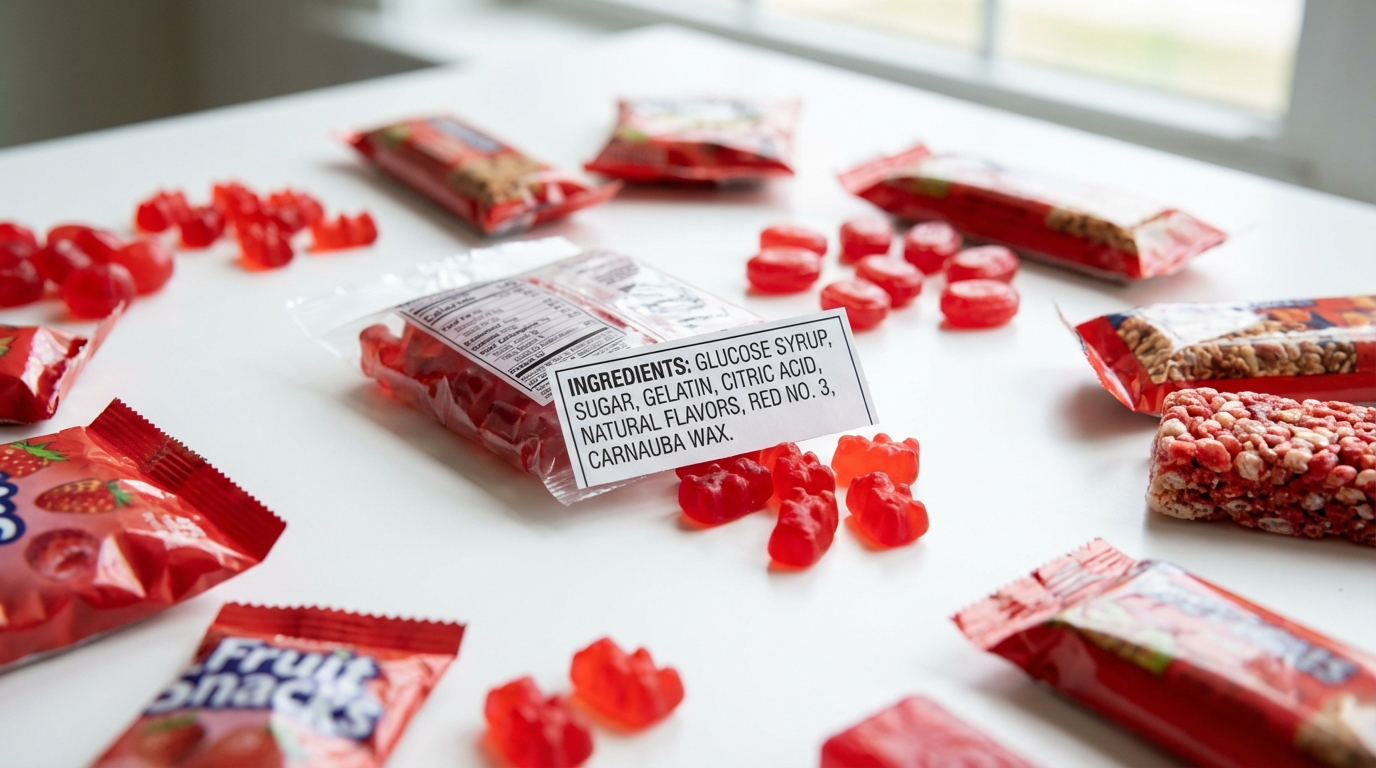
Red Dye No. 3 Banned From Food After 35 Years in Lipstick Exile
For 35 years, the FDA considered Red Dye No. 3 too dangerous to put on your lips but perfectly fine to put in your...