Red Dye No. 3 Banned From Food After 35 Years in Lipstick Exile
For 35 years, the FDA considered Red Dye No. 3 too dangerous to put on your lips but perfectly fine to put in your stomach. That contradiction ended on January 15, 2025, when the agency finally revoked authorization for the petroleum-based dye in food and ingested drugs. Now more than 9,000 products across the U.S. food supply need to be reformulated, and manufacturers are racing against a two-year deadline.
The ban marks the first time the FDA has revoked a color additive authorization in over three decades. It forced a reckoning that consumer advocates had been demanding since the 1980s.
What Is Red Dye No. 3?
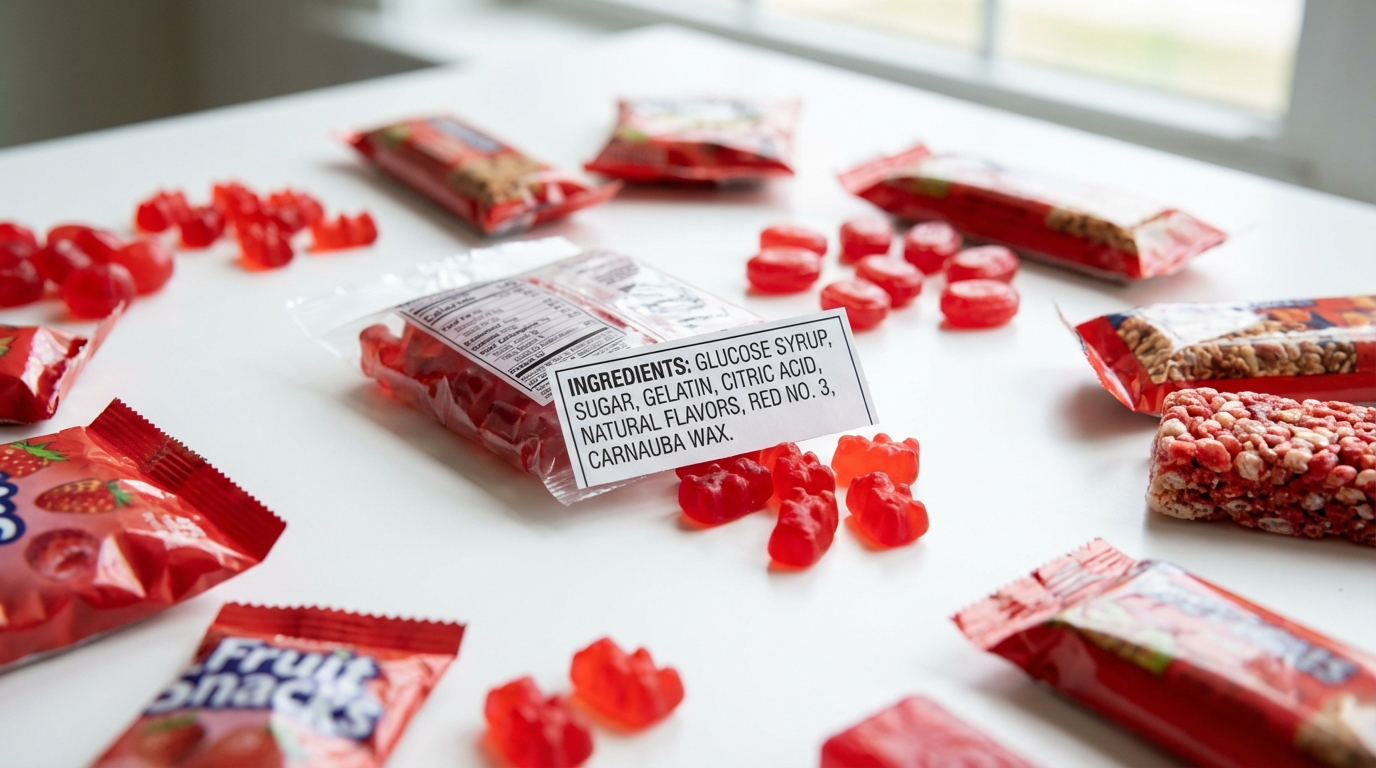
Red Dye No. 3, also called erythrosine, is a synthetic petroleum-based colorant that produces a bright cherry-red hue. It has been used in American food products since 1907, according to a legal analysis by O'Toole Scrivo, LLC. You will find it in candy, cakes, cookies, frozen desserts, chewing gum, gummy vitamins, cough syrups, and even vegan meat alternatives.
The dye's safety came into question decades ago. Animal studies in the 1980s demonstrated that Red No. 3 could induce thyroid tumors in male rats. The FDA acknowledged this evidence and banned the dye from cosmetics and externally applied drugs in 1990. But the agency left food untouched, and the dye continued appearing in thousands of products Americans ate daily.
Why the Ban Happened Now
The January 2025 decision traces back to a 2022 petition filed by the Center for Science in the Public Interest (CSPI), joined by 23 other health and consumer organizations, as reported by both NPR and DLA Piper. The petition invoked the Delaney Clause, a provision of the 1958 Federal Food, Drug, and Cosmetic Act that sets a zero-tolerance standard for cancer-causing additives.
Under the Delaney Clause, any color additive "shall be deemed unsafe, and shall not be listed, for any use which will or may result in ingestion" if it is "found by the Secretary to induce cancer when ingested by man or animal," according to federal statute cited by DLA Piper.
The FDA's own determination stated that "some studies have shown that Red Dye No. 3 can induce thyroid tumors in male rats." The agency simultaneously acknowledged that the hormonal mechanism causing tumors in rats "does not occur in humans," per the Husch Blackwell analysis. But the Delaney Clause leaves no room for debate on this point. If a substance causes cancer in animals, it gets pulled. Period.
"The FDA admitted that it caused cancer over three decades ago," said Peter Lurie, executive director of the Center for Science in the Public Interest, in an interview with NPR.
That 30-year gap between admission and action is precisely the kind of regulatory failure that erodes public trust. The dye was pulled from lipstick in 1990 because it touched your skin. It stayed in Peeps, popsicles, and children's vitamins because it went into your mouth. That distinction never made scientific sense to consumer advocates, and the FDA ultimately agreed.
9,000+ Products and a Ticking Clock
The scale of reformulation is enormous. Red Dye No. 3 is estimated to appear in more than 9,000 food products currently on U.S. shelves. Food manufacturers have until January 15, 2027 to remove it. Drug manufacturers received a slightly longer runway, with a January 18, 2028 deadline. After those dates, any product still containing the dye will be considered "adulterated" under federal law and subject to FDA seizure, according to the O'Toole Scrivo analysis.
The list of affected product categories is wide: candies, cakes, cupcakes, cookies, frozen desserts, vegan meat alternatives, chewing gum, gummy vitamins, and cough syrups. Some brands are already moving. Kellanova, maker of Pop-Tarts and MorningStar Farms products, has publicly committed to compliance. Just Born, the company behind Peeps, had already discontinued Red No. 3 in some of its products before the ban took effect.
But many smaller manufacturers are still assessing the cost and complexity of switching to alternative colorants.
The Reformulation Race
Replacing a synthetic dye that has been an industry staple for over a century is not simple. Natural alternatives like beet powder and vegetable juices can achieve similar red hues but behave differently in production. They may fade faster, change color under heat, or alter the taste of the final product.
This challenge is fueling growth in the natural food coloring market, which Foley Mansfield projects will expand from $1.8 billion in 2023 to over $3 billion by 2030. Biotech companies are moving to fill the gap. Phytolon, an Israeli biotech firm, is developing precision fermentation-based dyes. Global ingredient companies Givaudan and Chr. Hansen are also investing in natural colorant alternatives.
For food manufacturers, the financial stakes extend beyond reformulation costs. The Husch Blackwell analysis warns that companies face exposure to consumer class actions, contractual disputes with suppliers and retailers, and false advertising claims if their reformulated products do not match the quality consumers expect. The legal situation around this ban is still taking shape, and companies that move slowly may find themselves facing both regulatory penalties and consumer lawsuits.
The Bigger Picture: Six Dyes Still Standing
Red No. 3 is just one of seven petroleum-based synthetic food dyes approved for use in the United States. The remaining six (Red No. 40, Yellow No. 5, Yellow No. 6, Blue No. 1, Blue No. 2, and Green No. 3) are still legal despite growing concerns about their effects on children's behavior.
NPR reported that evidence suggests Red No. 3 and other synthetic petroleum-based dyes may worsen behavioral problems in children, potentially triggering ADHD-like symptoms. The European Union already requires warning labels on products containing these dyes. California passed a law in 2023 banning Red No. 3 from school foods. The FDA ban adds momentum to a broader push to re-examine all synthetic food colorants in the American food supply.
For parents reading ingredient labels on gummy vitamins or checking what gives their child's candy its bright red color, this ban validates what many already suspected: the regulatory system has not been keeping pace with the science.
What You Can Do
The two-year reformulation window means that products containing Red No. 3 will remain on store shelves through early 2027. During this transition period, the most practical step is checking ingredient labels. Red No. 3 appears on labels as "FD&C Red No. 3" or "Red 3."
Food safety apps like VeriFoods allow consumers to scan product barcodes and check whether items contain synthetic dyes, including Red No. 3. As brands reformulate, tracking which companies have already switched to natural alternatives can help consumers make informed choices without waiting for the regulatory deadline.
The Red No. 3 ban is a significant step, but it took 35 years of consumer advocacy, a formal petition from 24 organizations, and an act of Congress from 1958 to force the FDA's hand on a single dye. Six more synthetic dyes remain in the food supply. The fight over what goes into American food is far from finished.
Stay ahead of the label.
Get early access to VeriFoods and be the first to see what's really in your food.
Sources
- https://www.npr.org/2025/01/15/nx-s1-5260909/fda-bans-red-dye-3 - NPR, "FDA bans red dye #3," January 15, 2025
- https://www.oslaw.com/news/2025-02-25-fda-bans-red-no-3-what-companies-need-to-know - O'Toole Scrivo, LLC, "FDA Bans Red No. 3: What Companies Need to Know," February 25, 2025
- https://www.productlawperspective.com/2025/02/say-goodbye-to-the-red-dye-legal-implications-following-the-fdas-recent-ban/ - Husch Blackwell LLP, "Say Goodbye to the Red Dye: Legal Implications Following the FDA's Recent Ban," February 12, 2025
- https://www.dlapiper.com/en/insights/publications/2025/01/fda-bans-red-dye-no-3 - DLA Piper, "FDA bans Red Dye No. 3 under the Delaney Clause," January 2025
- https://www.foleymansfield.com/fdas-red-no-3-ban-reshapes-food-safety-legal-landscape/ - Foley Mansfield, "FDA's Red No. 3 Ban Reshapes Food Safety Legal Landscape," February 2025
Related Articles
EU Banned Titanium Dioxide in Food; It's Still in 11,000+ US Products Including Popular Candy
New research raises fresh concerns about a whitening chemical the EU banned three years ago. It's still in your candy...
Companies Pledge to Remove Artificial Dyes by 2028: What It Means for Your Health
By VeriFoods A significant shift is underway in the world of ice cream and frozen desserts. Dozens of major companies...
FDA Bans Red Dye No. 3 After 35 Years of Inaction
On January 15, 2025, the FDA revoked its authorization for Red Dye No. 3 in food and ingested drugs. The agency cited a...