Microplastics Block Blood Flow to the Brain Within 30 Minutes, Study Finds
Tiny plastic particles circulating in the bloodstream get swallowed by immune cells that then lodge in brain capillaries, choking off blood flow in as little as 30 minutes. That is the central finding of a study published January 22, 2025, in Science Advances, conducted by researchers from the Chinese Research Academy of Environmental Sciences, Duke University, and the National University of Singapore.
Using real-time imaging through windows surgically installed in the skulls of living mice, the team watched immune cells called macrophages consume plastic particles, swell in size, and pile up inside narrow blood vessels. The blockages looked and behaved like blood clots. Some persisted for at least seven days.
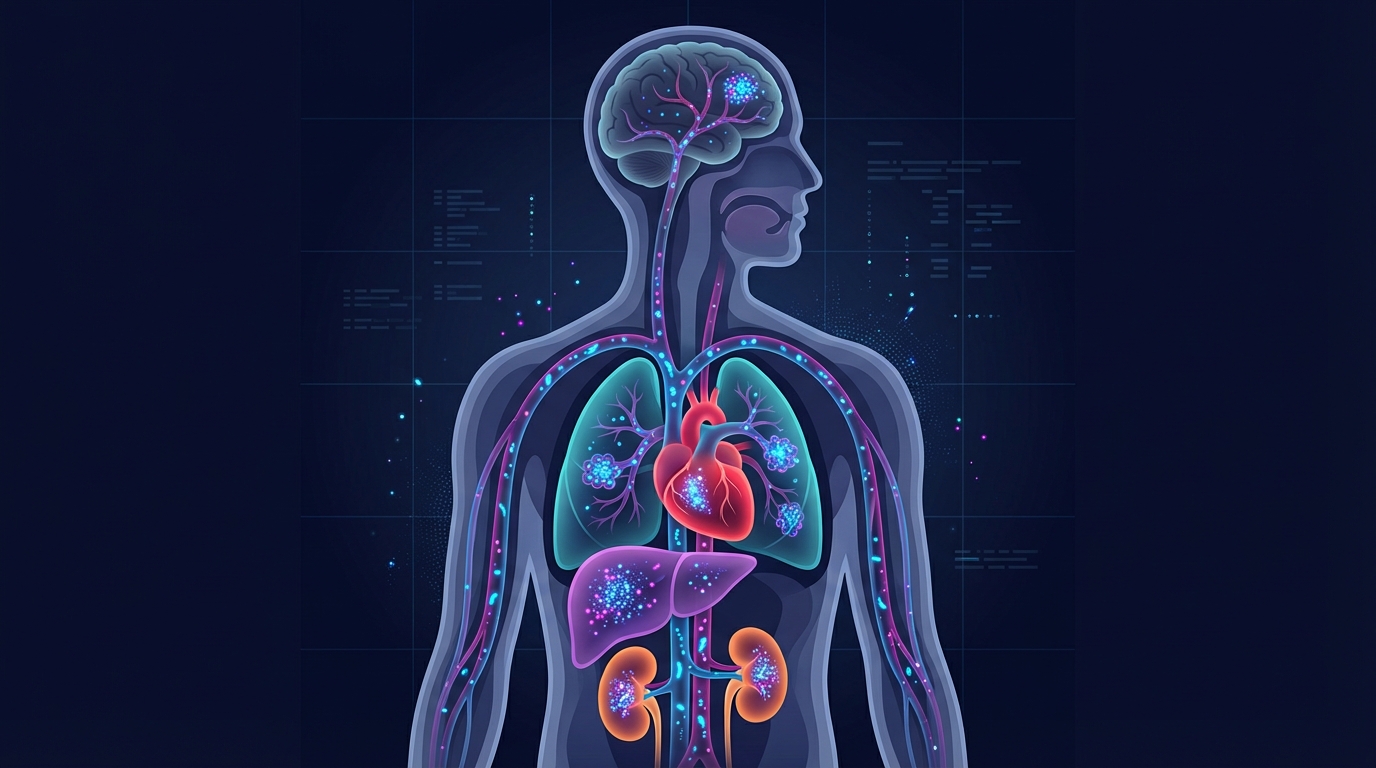
These findings arrived the same week as a Stanford Medicine report confirming that microplastics have been detected in virtually every organ in the human body. A separate study in Scientific Reports found detectable plastic particles in 88.9% of human blood samples tested.
Three studies, one month, one takeaway: we are not just exposed to microplastics. We are saturated with them.
How Plastic Particles Hijack the Immune System
The Science Advances study is the first to document, in real time, the mechanism by which microplastics obstruct blood flow in the brain. Researchers injected eight-week-old male mice with polystyrene microplastics in three sizes (5 micrometers, 2 micrometers, and 80 nanometers) at concentrations designed to approximate levels found in human blood.
Using miniature two-photon microscopy and laser speckle contrast imaging, the team watched as macrophages engulfed the plastic particles. The process physically altered the immune cells. They swelled, lost their normal granularity, and took on what the researchers described as an "umbrella-like" shape at vascular bends. These bloated cells became too large to pass through narrow cerebral capillaries.
Blood flow in affected areas of the brain dropped within 30 minutes of injection.
A key distinction from the paper: the damage was not caused by the plastic itself penetrating brain tissue. As the study authors wrote, microplastics disrupt tissue function "indirectly through regulation of cell obstruction...rather than direct tissue penetration." The immune system''s own defense response created the problem.
Larger particles (5 micrometers) caused the most prolonged blockages. Smaller particles cleared faster, but even nanoscale plastics triggered the macrophage response. About 18% of obstructed vessels remained blocked for at least seven days.
The Behavioral Damage
Consequences showed up in the mice quickly. Compared to controls, exposed mice displayed decreased locomotion, impaired spatial memory, and reduced motor coordination and endurance.
As Newsweek reported on January 24, the affected mice "appeared slower and less coordinated." Most neurobehavioral impairments improved within four weeks as some blockages cleared naturally, but persistent obstructions raise serious questions about cumulative, long-term exposure.
The research team also emphasized an important caveat. "The size and structure of blood vessels in the brains of mice are different to those of humans," as Newsweek reported. Whether identical blockage patterns occur in human brains remains unconfirmed. But the findings prompted the researchers to call for targeted studies in people with cardiovascular conditions, who may be especially vulnerable.
Plastic in Every Organ, From Brain to Placenta
While the Science Advances study documented how microplastics cause damage, a report published January 29 by Stanford Medicine cataloged where they have been found in the human body. The short version: essentially everywhere.
Researchers have detected microplastics in brain tissue, testicles, the heart, stomach, lymph nodes, placenta, urine, breastmilk, semen, and meconium (a newborn''s first stool). They have been identified in over 1,300 species. Adults are estimated to ingest roughly one credit card''s worth of microplastics per week.
"Plastic never goes away," said Dr. Desiree LaBeaud, a pediatric infectious disease specialist at Stanford Medicine. "It just breaks down into finer and finer particles."
Exposure begins before birth. With microplastics found in both placenta and meconium, Dr. LaBeaud put it bluntly: "We''re born pre-polluted."
Dr. Kara Meister, a pediatric otolaryngologist at Stanford, described finding Teflon specks visible under a microscope in the tonsil tissue of children she operates on. These particles are turning up even in the tissue of young patients undergoing routine procedures.
Dr. Meister offered some measured perspective. "Just because you have a little plastic in you doesn''t necessarily mean doomsday," she said. The dose, the type of plastic, and the location all matter. But over 10,000 chemicals are used in plastic production. Two-thirds lack basic safety assessments. At least 2,400 have been identified as potentially toxic. "A little plastic" adds up fast.
Microplastics in 88.9% of Blood Samples
A study published in Scientific Reports (Nature) by Dong-Wook Lee and colleagues at Inha University in South Korea provides some of the clearest data yet on how common microplastics are in human blood.
The team analyzed blood samples from 36 healthy Korean adults aged 20 to 60. They found detectable microplastic particles in 32 of 36 subjects, a rate of 88.9%. Average concentration: 4.2 particles per milliliter of blood. The most common particle size ranged from 20 to 50 micrometers. Fragments were far more prevalent than fibers (86.1% of samples versus 36.1%).
Researchers went beyond detection and measured coagulation and inflammation biomarkers. Higher microplastic concentrations correlated with prolonged activated partial thromboplastin time (a marker of how long blood takes to clot), elevated fibrinogen (a clotting protein), and elevated C-reactive protein (a marker of systemic inflammation). In short, more plastic in the blood meant measurable disruptions in clotting and immune response.
One finding stood out for its practical implications. Participants who stored more than 50% of their refrigerator contents in plastic containers had blood microplastic concentrations of 6.8 particles per milliliter. That is nearly three times the 2.4 particles per milliliter found in those who used fewer plastic containers. What you store your food in appears to directly influence how much plastic ends up in your blood.
The Scale of the Problem
These three studies exist against a backdrop of growing evidence about plastic contamination in both the environment and human bodies.
Between 10 and 40 million metric tons of microplastics enter the environment each year, according to the Stanford Medicine report. That figure could double by 2040. A 2024 study from Columbia University found approximately 240,000 plastic particles per liter of bottled water, suggesting that one of the most common "healthy" choices people make is a significant source of microplastic ingestion.
Research has drawn connections between microplastics and inflammation, immune impairment, cancer, heart attacks, and reproductive issues, according to the Stanford Medicine report. A 2024 study published in the New England Journal of Medicine found that patients with microplastics detected in arterial plaque faced elevated risks of cardiac events and death.
The Science Advances study adds a new mechanism: reduced cerebral blood flow caused by the body''s own immune response to plastic particles. If confirmed in humans, this could have implications for stroke risk, cognitive decline, and neurodegenerative disease.
What This Means for You
The research is still developing, and scientists have been careful to note that animal studies do not automatically translate to humans. But the direction of the evidence is consistent. Microplastics are in your blood, in your organs, and potentially obstructing blood flow in ways that trigger inflammation and impair brain function.
Here is what you can do to reduce your exposure, based on recommendations from the researchers and physicians cited in these studies.
Reduce plastic food contact. The Inha University blood study showed a nearly threefold difference in blood microplastic levels based on refrigerator container choices alone. Switch from plastic food storage containers to glass or stainless steel. Never microwave food in plastic containers or with plastic wrap.
Rethink bottled water. With 240,000 plastic particles per liter found in bottled water, a reusable glass or stainless steel water bottle paired with a home filter is a practical swap.
Avoid nonstick cookware. Dr. Meister''s discovery of Teflon particles in children''s tonsil tissue is a reminder that plastic contamination extends beyond obvious plastic products. Consider cast iron, stainless steel, or ceramic cookware.
Choose natural fibers. Synthetic clothing sheds microplastic fibers with every wash and every wear. Cotton, wool, linen, and hemp reduce this source of exposure.
Check your products. VeriFoods lets you scan barcodes to see contamination data on packaged foods, including concerns related to microplastics. Knowing what is in your food, and what it comes packaged in, is a first step toward reducing exposure.
As Dr. LaBeaud put it: "All of us need to stop using plastic as much as we can to protect our health, especially single-use plastics."
Microplastics are already inside us. What we can control is how much more we add.
Stay ahead of the label.
Get early access to VeriFoods and be the first to see what's really in your food.
Sources
Huang, H., Hou, J., Li, M., Wei, F., Liao, Y., & Xi, B. "Microplastics obstruct cerebral blood flow by altering immune cell behavior." Science Advances, January 22, 2025. https://www.science.org/doi/10.1126/sciadv.adr8243
"Microplastics Can Block Blood Flow to Mice Brains, Study Finds." Yale Environment 360, January 27, 2025. https://e360.yale.edu/digest/microplastics-brain-blood-mice
"Microplastics Block Blood Flow in Mice as Immune Cells Ingest Particles." Newsweek, January 24, 2025. https://www.newsweek.com/microplastics-block-blood-flow-mice-immune-cells-2020225
"Microplastics in the bloodstream may pose hidden risks to brain health." News-Medical.net, January 23, 2025. https://www.news-medical.net/news/20250123/Microplastics-in-the-bloodstream-may-pose-hidden-risks-to-brain-health.aspx
"Microplastics in the body: How tiny plastic fragments pollute our organs." Stanford Medicine SCOPE, January 29, 2025. https://med.stanford.edu/news/insights/2025/01/microplastics-in-body-polluted-tiny-plastic-fragments.html
Lee, D.W. et al. "Microplastics detected in human blood linked to altered coagulation markers." Scientific Reports (Nature), December 2024. https://www.nature.com/articles/s41598-024-81931-9
"Microplastics detected in human blood linked to altered coagulation markers." News-Medical.net, December 10, 2024. https://www.news-medical.net/news/20241210/Microplastics-detected-in-human-blood-linked-to-altered-coagulation-markers.aspx
Related Articles

The truth about nanoplastics in bottled water
There’s no doubt that water is one of the healthiest choices you can make. It keeps you hydrated without adding...
Microplastics Rank Among Top 10 Predictors of Chronic Disease as Brain Levels Surge 50%
Researchers analyzed 154 socioeconomic and environmental factors to determine which best predicted chronic disease...
Your Brain Now Contains a Spoonful of Plastic, and Levels Are Rising Fast
Human brains now contain microplastics at concentrations equivalent to the weight of a standard plastic spoon. That...