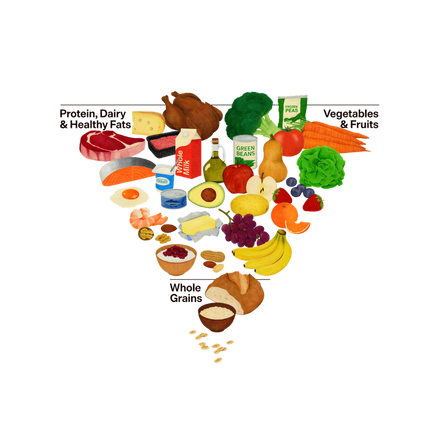
RFK Jr. Unveils Food Pyramid Favoring Whole Foods and Healthy Fats
A major shift is underway in the world of nutrition policy, as the latest U.S. Dietary Guidelines take a bold new direction. Announced by Health Secretary Robert F. Kennedy Jr., these updated recommendations move away from decades of low-fat, grain-heavy advice and instead emphasize whole foods, animal proteins, and healthy fats. Kennedy has made it clear that his goal is to combat the nation's rising rates of obesity and chronic illness by focusing on the quality of what Americans eat, rather than simply counting calories or restricting fat.
For years, federal guidelines have placed grains and low-fat foods at the core of healthy eating, with saturated fats and red meat cast as dietary villains. The new guidelines, however, flip that script. Animal proteins like red meat, poultry, fish, and eggs are now encouraged as primary protein sources. Full-fat dairy products such as milk, cheese, and yogurt are promoted over their low-fat counterparts, and traditional animal fats like lard and tallow are recommended for cooking instead of seed oils. The base of the new food pyramid features fresh vegetables and fruits, followed by proteins and full-fat dairy, while grains and processed foods have been relegated to the narrow top.
Kennedy has not been shy about his stance, declaring, "We're ending the war on saturated fats. Saturated fats from sources like butter, cheese, and beef tallow are not the enemy. Ultra-processed foods and added sugars are" [Mike DiGirolamo, OPB, 2026]. The guidelines urge Americans to keep added sugars to less than 5-10% of daily calories and to avoid highly processed foods altogether. Artificial sweeteners are also discouraged, with a new emphasis on gut health through fermented foods like yogurt and kimchi.
This approach has sparked significant debate among nutrition experts. Some praise the renewed focus on whole foods and the reduction of added sugars, pointing to mounting evidence that ultra-processed foods are linked to obesity and chronic disease. Others, like Dr. Walter Willett of Harvard, caution that minimizing the risks of saturated fats could have unintended consequences for heart health, referencing decades of research connecting high saturated fat intake to cardiovascular disease.
The American Heart Association has echoed these concerns, acknowledging the benefits of whole foods but warning that increased consumption of red meat and full-fat dairy could drive up saturated fat intake. Despite these reservations, supporters of the guidelines argue that emerging science is challenging old assumptions about dietary fat, and that the real culprits behind poor health outcomes are sugar and industrial seed oils.
Beyond dietary recommendations, the new guidelines also address lifestyle factors such as alcohol consumption--advising moderation or abstinence--and underscore the importance of physical activity. These changes will have a wide-reaching impact, shaping school lunches, food assistance programs, and public health campaigns across the country.
At VeriFoods, we believe that food should be as simple and close to nature as possible. While some experts may downplay the risks associated with saturated fats, artificial additives, or environmental contaminants, we take a precautionary approach. The long-term effects of many non-natural substances cannot be fully known, which is why we prioritize rigorous testing for contaminants like pesticides, heavy metals, microplastics, and PFAS. Our mission is to help consumers make informed choices rooted in transparency and a return to real, unprocessed foods.
As the new guidelines begin to influence what ends up on America's tables, one thing is clear: the conversation about what constitutes a healthy diet is far from settled. The shift toward whole foods, healthy fats, and reduced sugar is a promising step, but ongoing research and vigilant consumer awareness will remain crucial in navigating the evolving landscape of nutrition science.
💬 Do you think the new guidelines' focus on whole foods and healthy fats will help improve public health, or are you concerned about the increased emphasis on saturated fats?
Share your thoughts in the comments below!
References:
Mike DiGirolamo, OPB, 2026. RFK Jr.'s new dietary guidelines end 'the war on saturated fats'.
CBS News, 2026-01-08. RFK Jr.'s new food pyramid emphasizes protein, healthy fats. Here's what to know about the dietary guidelines.
Stay ahead of the label.
Get early access to VeriFoods and be the first to see what's really in your food.
Related Articles

168 Common Chemicals Found to Damage Your Gut Bacteria, Cambridge Study Reveals
A groundbreaking University of Cambridge study tested over 1,000 chemicals and found 168 common compounds are quietly...

Federal Dietary Guidelines Now Warn Against Seed Oils and Ultra-Processed Foods
The 2025-2030 Dietary Guidelines for Americans mark a historic shift: for the first time, the federal government...

States Rush to Ban Artificial Food Dyes as West Virginia Makes History
On March 24, 2025, West Virginia Governor Patrick Morrisey signed HB 2354 into law, making his state the first in...