West Virginia Bans 9 Food Chemicals as States Race Ahead of FDA
West Virginia Governor Patrick Morrisey signed HB 2354 into law in January 2026, banning nine food chemicals from products sold in the state. Seven of those chemicals are synthetic dyes (Red 40, Red 3, Yellow 5, Yellow 6, Blue 1, Blue 2, and Green 3), already prohibited in the European Union. The remaining two, titanium dioxide and brominated vegetable oil, have drawn scrutiny from food safety researchers for years. West Virginia is not acting alone. Across the country, state legislatures are writing the food safety rules that the FDA has not.
Why States Are Taking Over
The U.S. permits more than 10,000 additives in its food supply. Many were approved decades ago under the FDA's "Generally Recognized as Safe" (GRAS) system, which allows manufacturers to self-certify ingredients without independent review. The agency has conducted minimal post-market safety review of the chemicals already in circulation.
The consequences are visible. The European Union banned titanium dioxide as a food additive in 2022 after the European Food Safety Authority concluded it could damage DNA. Red 3 was linked to cancer in laboratory animals in the 1990s, yet it stayed legal in American food products until California passed the first state-level ban in 2023. The pattern repeats: Europe restricts, the FDA delays, and states eventually fill the gap.
Chemical & Engineering News reported in January 2026 that state and local governments are expected to "leapfrog" federal regulators on food chemical restrictions. The publication documented dozens of states that have introduced or passed bills targeting synthetic dyes, titanium dioxide, BHA, and other additives in food products sold within their borders.
The West Virginia Law: HB 2354
HB 2354 targets nine specific chemicals:
Seven synthetic dyes: Red 40, Red 3, Yellow 5, Yellow 6, Blue 1, Blue 2, and Green 3. These petroleum-based colorants appear in candy, cereals, snack foods, beverages, and even medications marketed to children. All seven are already banned or restricted in the European Union, where manufacturers use natural alternatives like beet juice, turmeric, and paprika extract.
Titanium dioxide: A whitening agent used in powdered sugar coatings, coffee creamers, chewing gum, and frosting. The EU banned it from food in August 2022 after safety reviewers found it could no longer be considered safe due to concerns about genotoxicity.
Brominated vegetable oil (BVO): A stabilizer once common in citrus-flavored soft drinks. The FDA itself proposed revoking its authorization in November 2023 after studies linked it to organ damage in animal testing, but the regulatory process moved slowly. California and several states banned it outright before the federal rule took full effect.
The Environmental Working Group (EWG) tracks these bans through an interactive map showing state-by-state food chemical legislation across the U.S. Their January 2026 data confirms West Virginia among the states that have moved from proposals to signed law.
California and the Broader State Wave
West Virginia is part of a much larger movement. California advanced AB 899 in January 2026, targeting five chemicals: azodicarbonamide (ADA), butylated hydroxyanisole (BHA), potassium bromate, titanium dioxide, and Red 3. California had already passed the California Food Safety Act in 2023, banning Red 3, potassium bromate, propylparaben, and brominated vegetable oil. AB 899 expands that list.
According to Chemical & Engineering News, dozens of additional states introduced similar legislation in early 2026. Illinois, Missouri, and other states filed bills targeting overlapping sets of synthetic dyes and preservatives. The reporting describes a legislative environment where state governments are no longer waiting for federal action.
The result is a patchwork. A candy bar legal in one state may contain chemicals banned in the next. Food manufacturers face a growing compliance challenge, but the underlying message from legislators is clear: consumers should not have to eat chemicals that other developed nations have already deemed unsafe.
Federal Guidelines Shift Too
The state-level push recently picked up an unlikely ally: the federal government itself, though only in the form of guidance, not enforcement.
The USDA released its 2025-2030 Dietary Guidelines for Americans in January 2026, and they included a first: specific language recommending that consumers limit highly processed foods containing artificial flavors, petroleum-based dyes, artificial preservatives, and non-nutritive sweeteners. The National Law Review reported that this represents a meaningful shift in federal dietary guidance, one that tracks closely with what state legislatures have already put into law.
To be clear, guidance is not the same as a ban. The Dietary Guidelines are recommendations, not regulations. The FDA still controls food additive approvals, and the agency has dragged its feet on restricting the very chemicals states are now banning. But the alignment matters. When federal nutrition guidance and state legislation point the same direction, industry reformulation tends to follow.
What This Means for Consumers
This growing patchwork of state food chemical laws creates a real problem at the grocery store. The same product may be reformulated for one state and sold with its original formula next door. Labels don't always reflect which version a consumer is buying, and national brands frequently maintain different formulations for different markets without telling anyone.
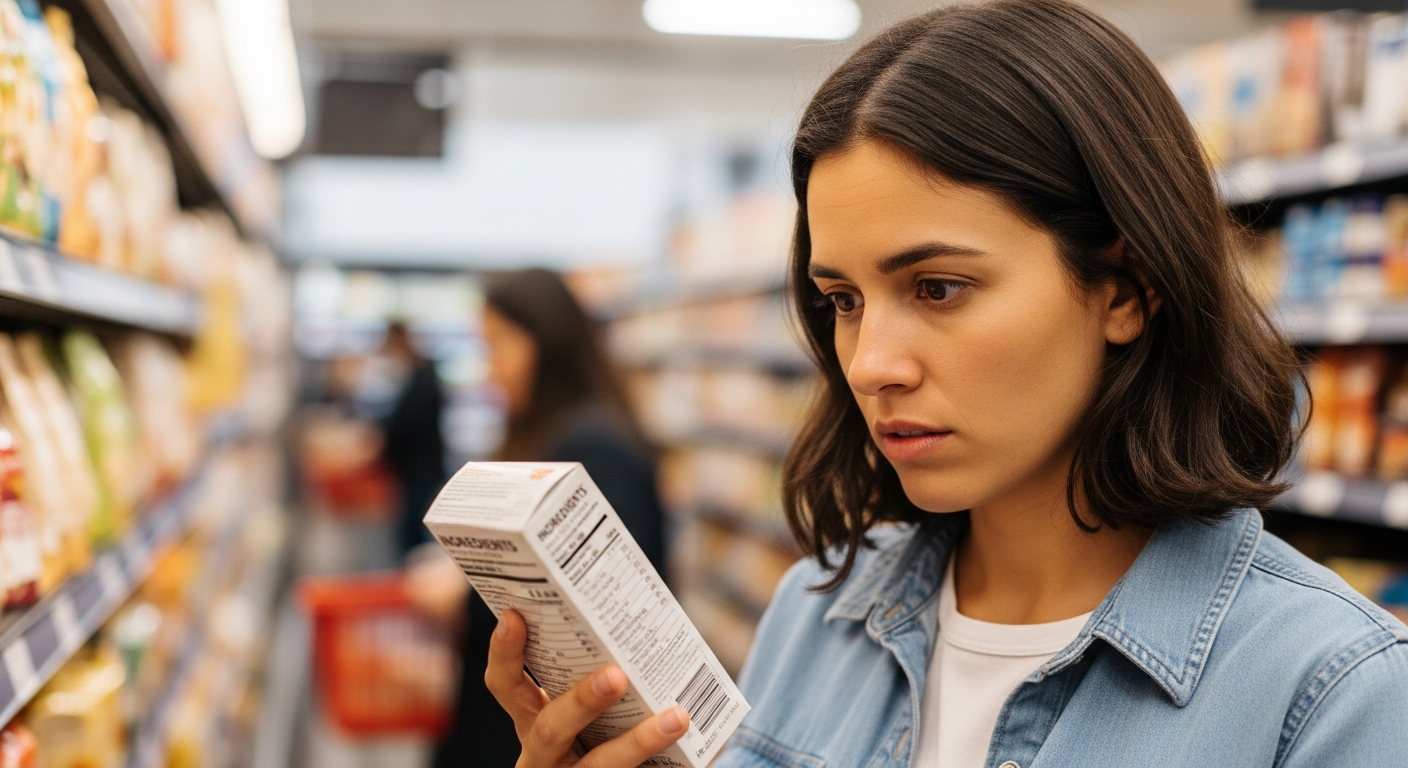
For consumers trying to avoid these chemicals, checking ingredient lists is the most direct action available. Titanium dioxide appears on labels by name. Synthetic dyes are listed as their color and number (Red 40, Yellow 5, etc.). BVO and BHA are listed in ingredients panels, though often in small print among dozens of other additives.
VeriFoods flags titanium dioxide, synthetic dyes, BHA, brominated vegetable oil, and other chemicals targeted by these state bans directly within product scans. As the regulatory map becomes more fragmented across states, the app serves as a single reference point for what is actually in the food, regardless of which jurisdiction a consumer lives in.
None of these chemicals are obscure industrial compounds. They sit in cereal boxes, soft drink bottles, candy bags, and frosting tubes on grocery store shelves today. West Virginia, California, and a growing number of states have decided that waiting for the FDA is no longer an option. The question for the rest of the country is simple: how much longer will they wait?
Stay ahead of the label.
Get early access to VeriFoods and be the first to see what's really in your food.
Sources
- Environmental Working Group - "Interactive map: Tracking state food chemical regulation in the U.S." - January 2026. https://www.ewg.org/news-insights/news/2026/01/interactive-map-tracking-state-food-chemical-regulation-us
- Chemical & Engineering News - "States expected to leapfrog feds on food-chemical regulation" - January 2026. https://cen.acs.org/policy/chemical-regulation/food-chemical-additive-dye-ingredient-ultraprocessed-fda-maha-gras-preemption/104/web/2026/01
- National Law Review - "USDA's New Dietary Guidelines for Americans, 2025-2030, Include Focus on Chemicals in the Food Supply" - January 2026. https://natlawreview.com/article/usdas-new-dietary-guidelines-americans-2025-2030-include-focus-chemicals-food
Related Articles
The FDA Promised to Ban Artificial Food Dyes. Instead, It Rewrote the Rules.
The FDA quietly abandoned its pledge to eliminate six synthetic food dyes by 2026, pushed the deadline to 2027, and...
West Virginia Signs Strictest Food Dye Ban in U.S. History as 20+ States Follow
On March 24, 2025, West Virginia Governor Patrick Morrisey signed into law the most comprehensive food additive ban any...
Red Dye No. 3 Banned From Food After 35 Years in Lipstick Exile
For 35 years, the FDA considered Red Dye No. 3 too dangerous to put on your lips but perfectly fine to put in your...